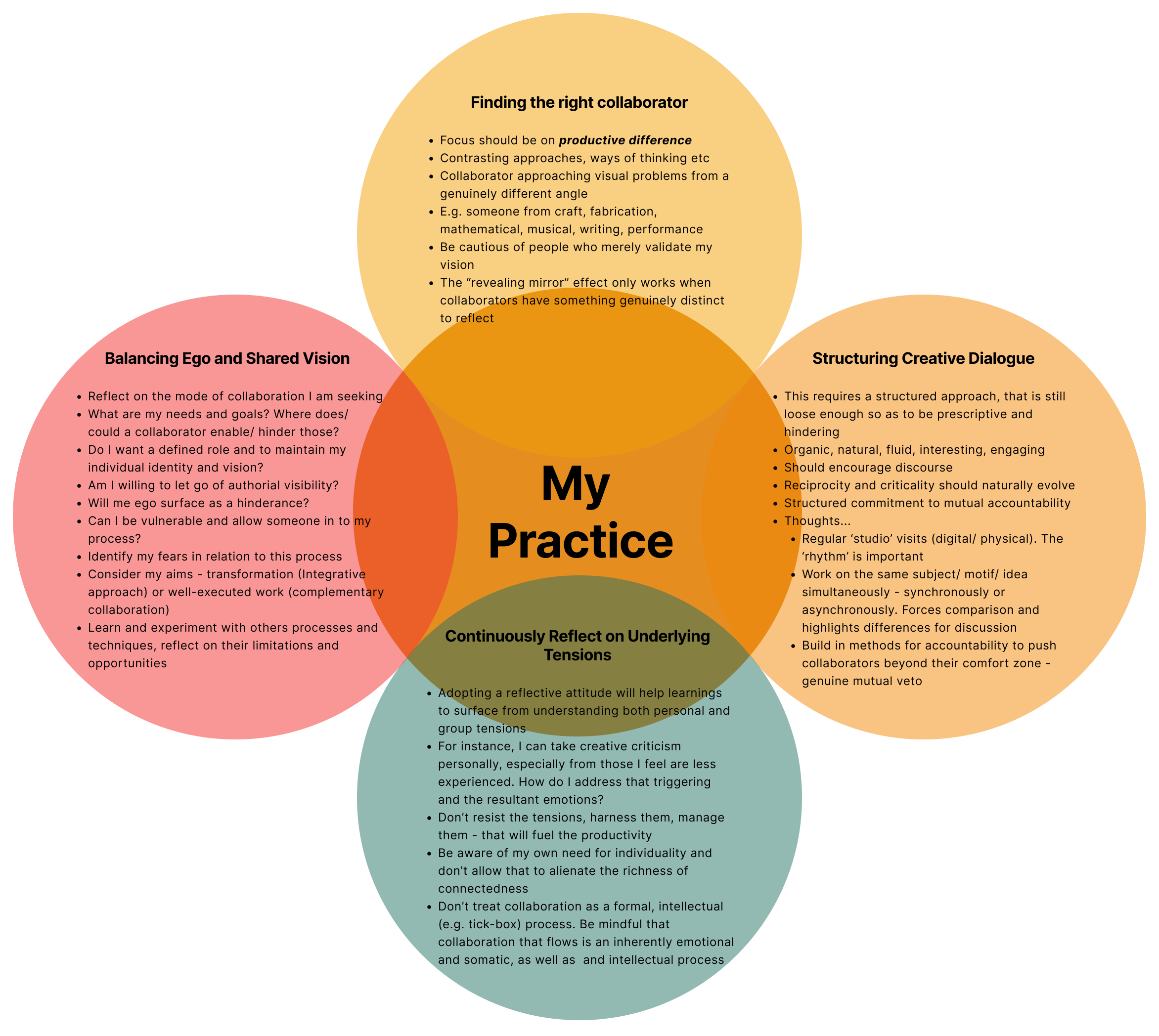
Insights for Application to Own Practice
Overview of Research
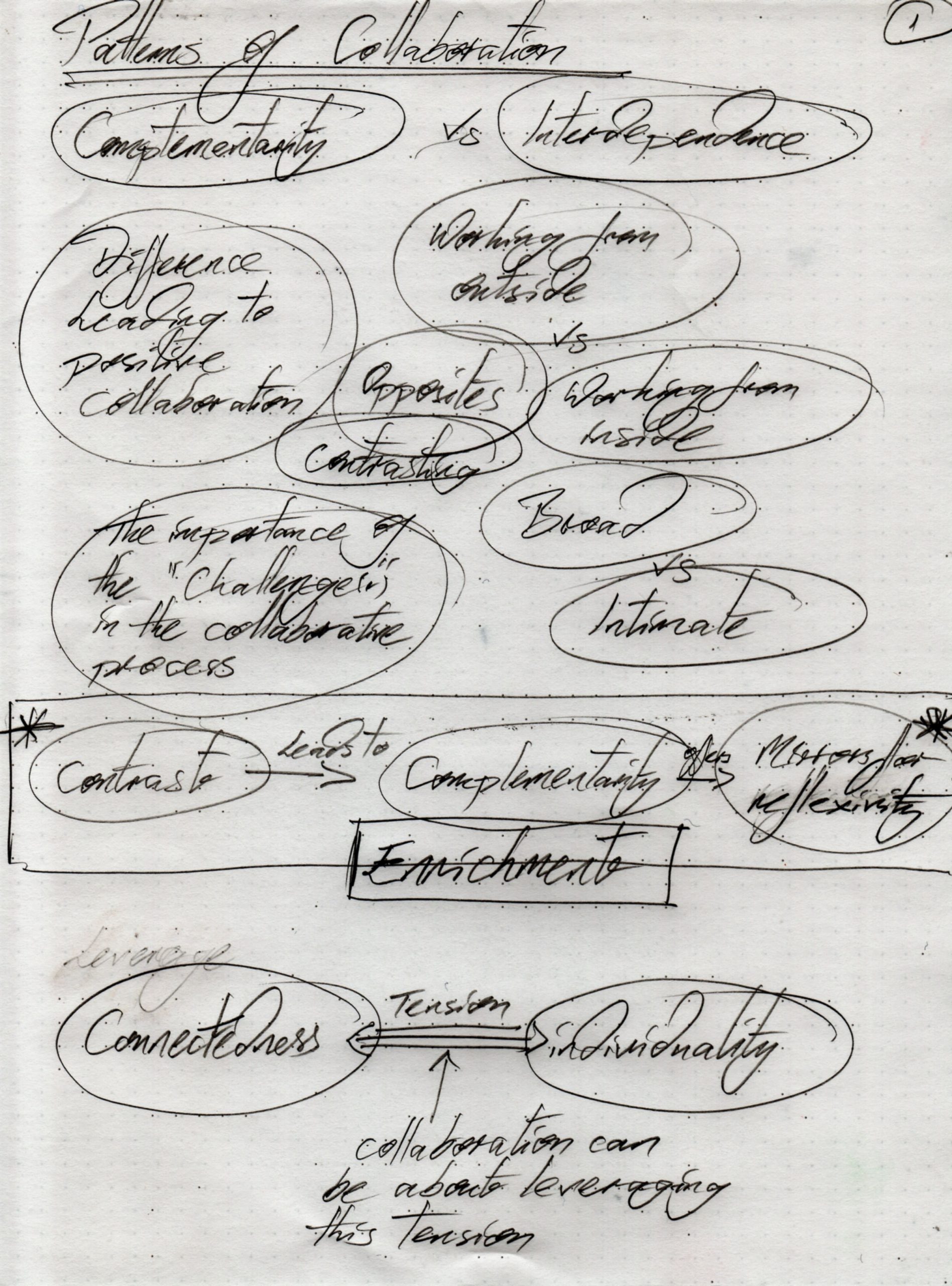
- Complementarity vs Interdependence
- The idea of working from the outside-to-inside first as opposed to working from the inside-to-outside first
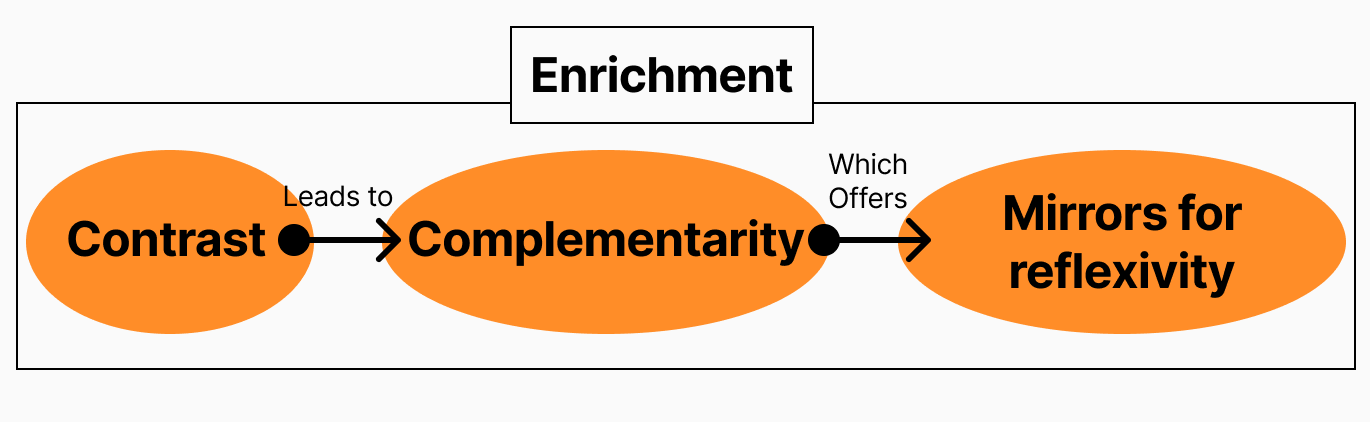
- I would suggest that it is the presence of ‘difference’ that is one of the factors that leads to positive collaboration
- Opposites leads to contrast. Broad vs intimate
- ‘Challenges’ drive development. Being exposed to alternate perspectives, practices, knowledge etc can lead to healthy challenges: challenges are intrinsic in health collaboration
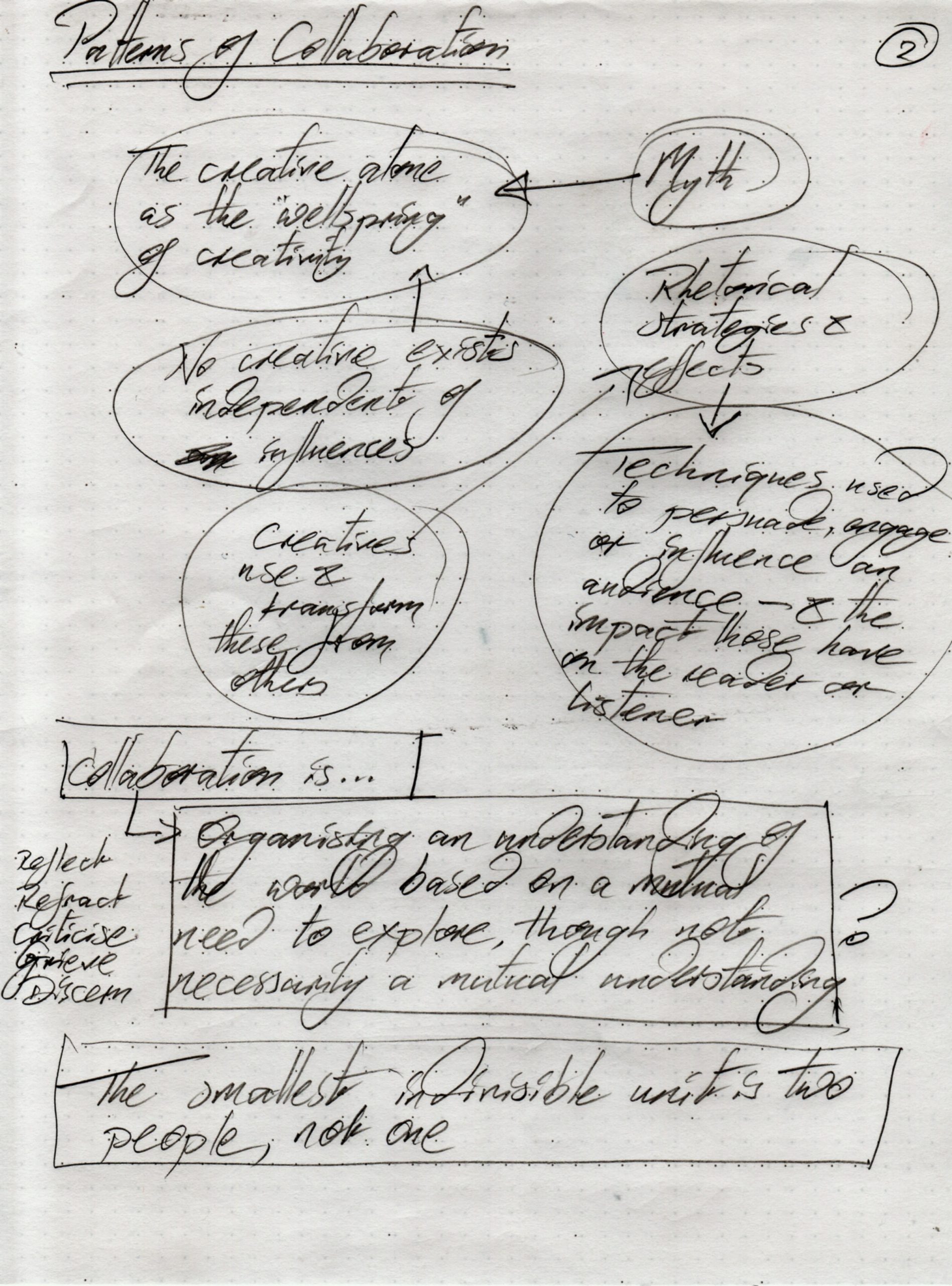
- creative output can be regarded as a “Rhetorical Strategy and its effects” – techniques used to persuade, engage or influence an audience and the impact those have on the viewer, reader, listener etc
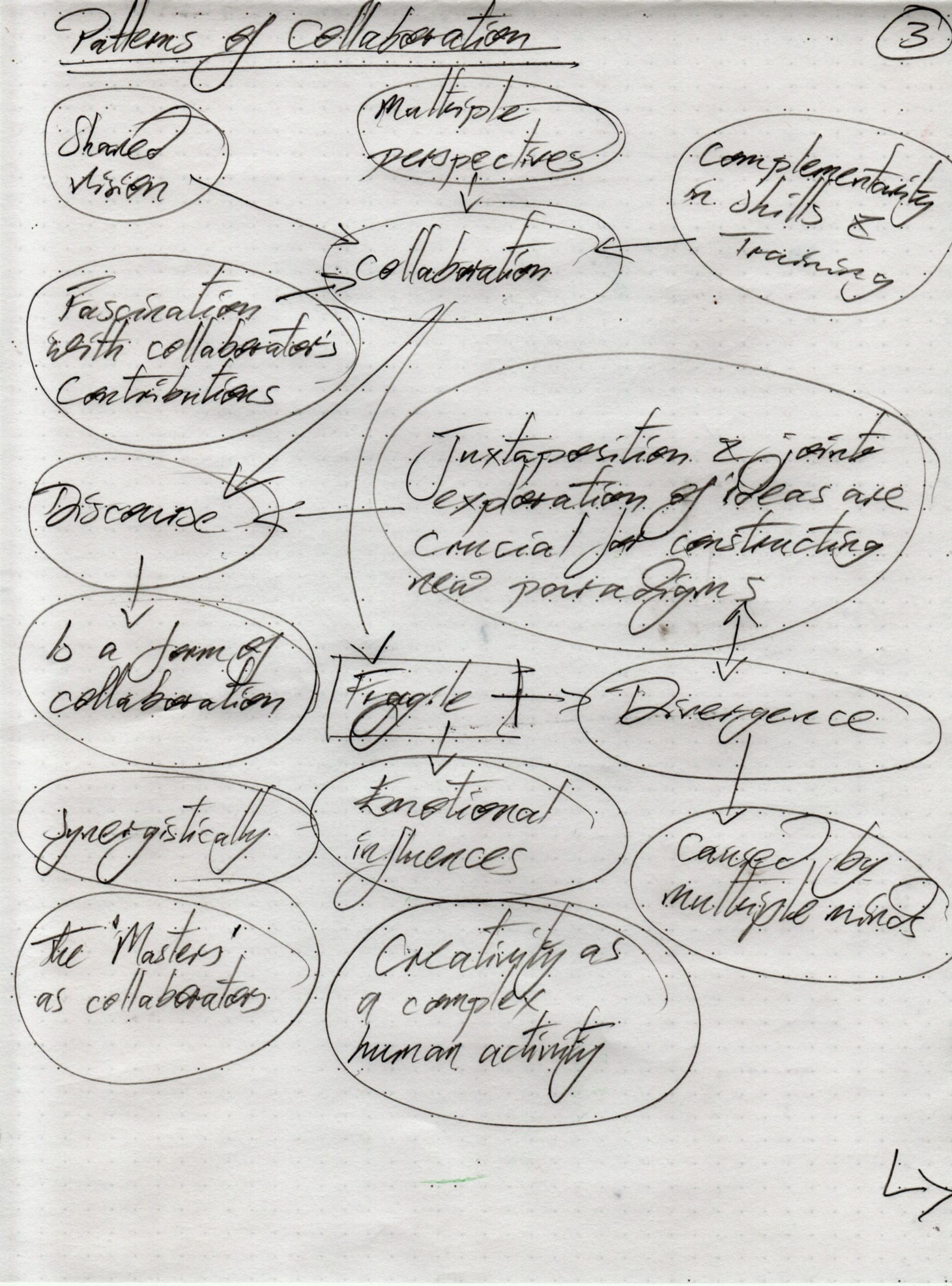
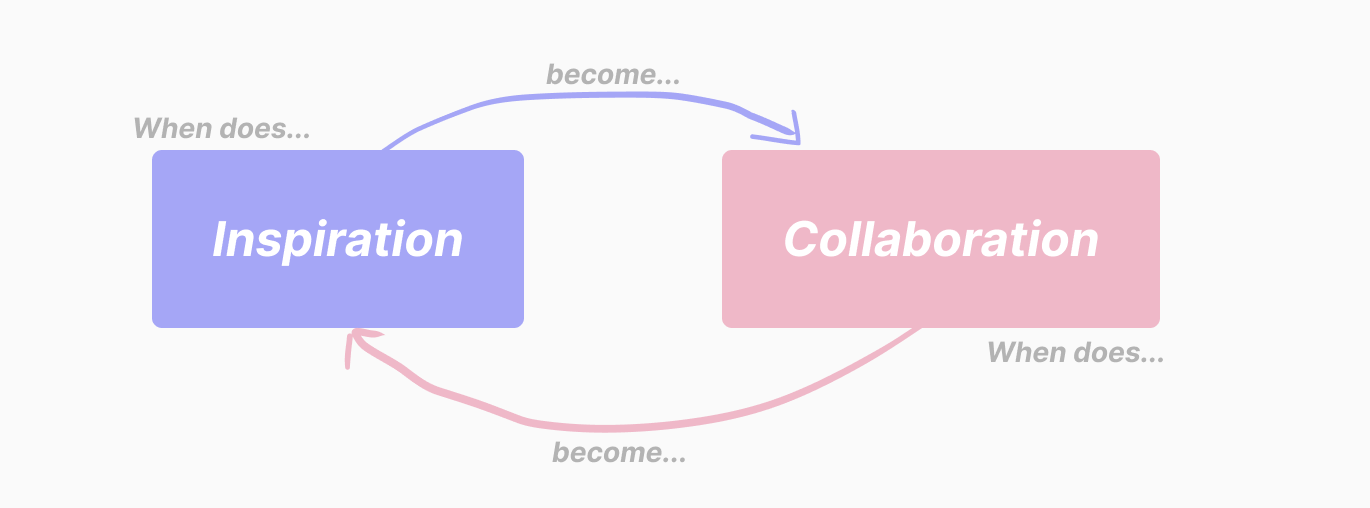
- Juxtaposition and joint exploration of ideas are crucial for constructing new paradigms
- Discourse is a form of collaboration
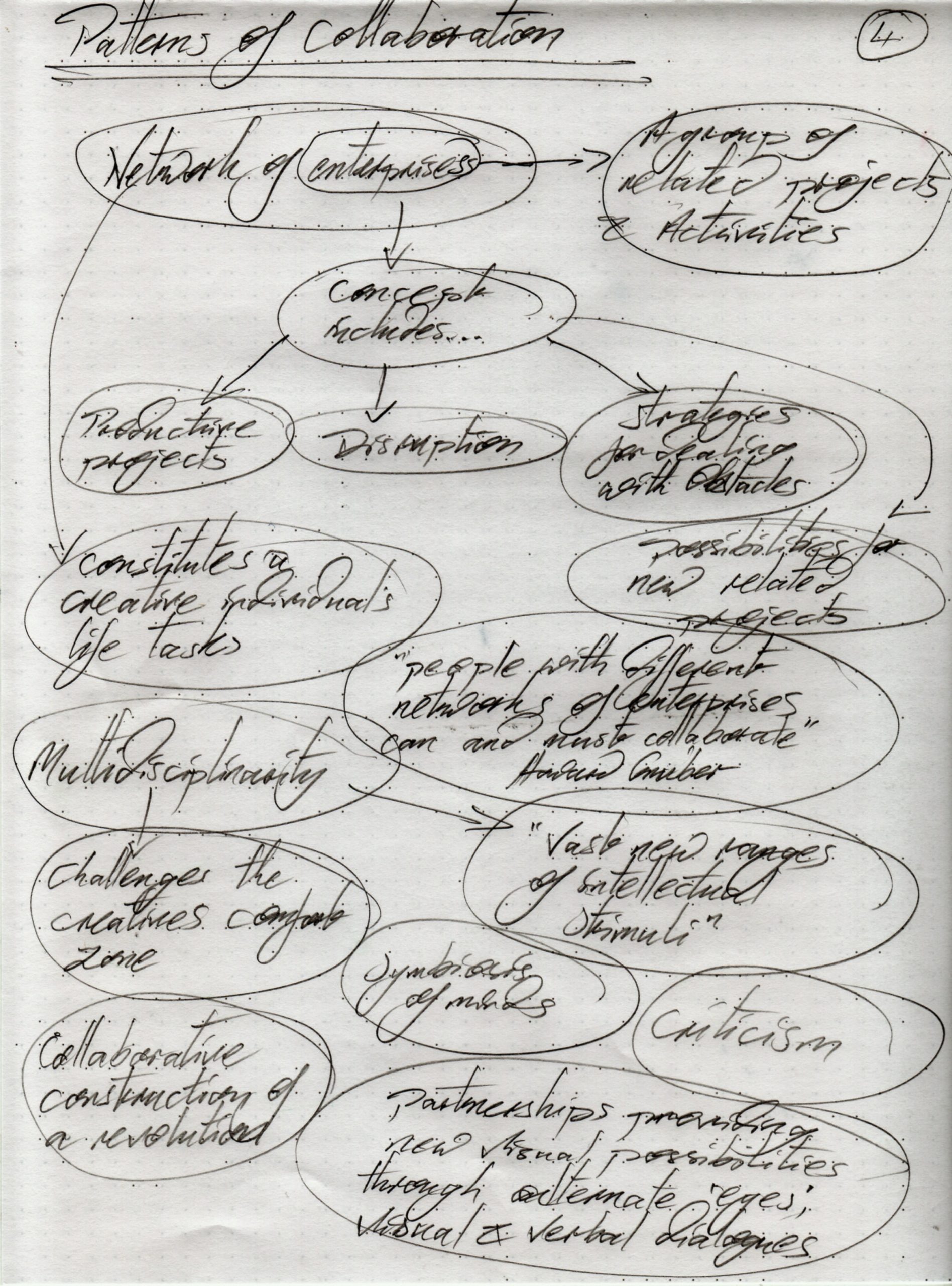
- Multidisciplinarity challenges the creatives comfort zone
- Partnerships provide new visual possibilities through alternate eyes, visual and verbal dialogues
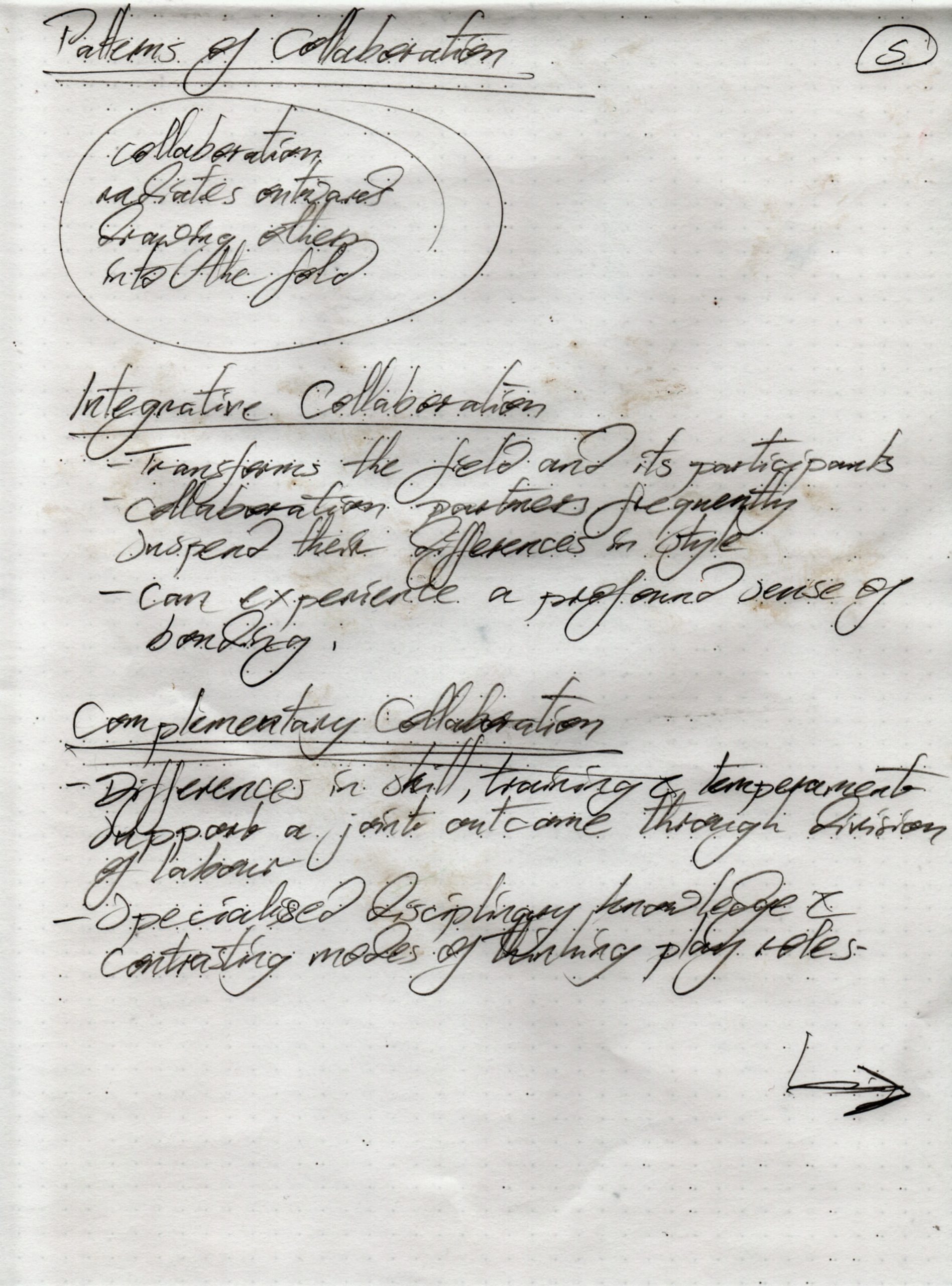
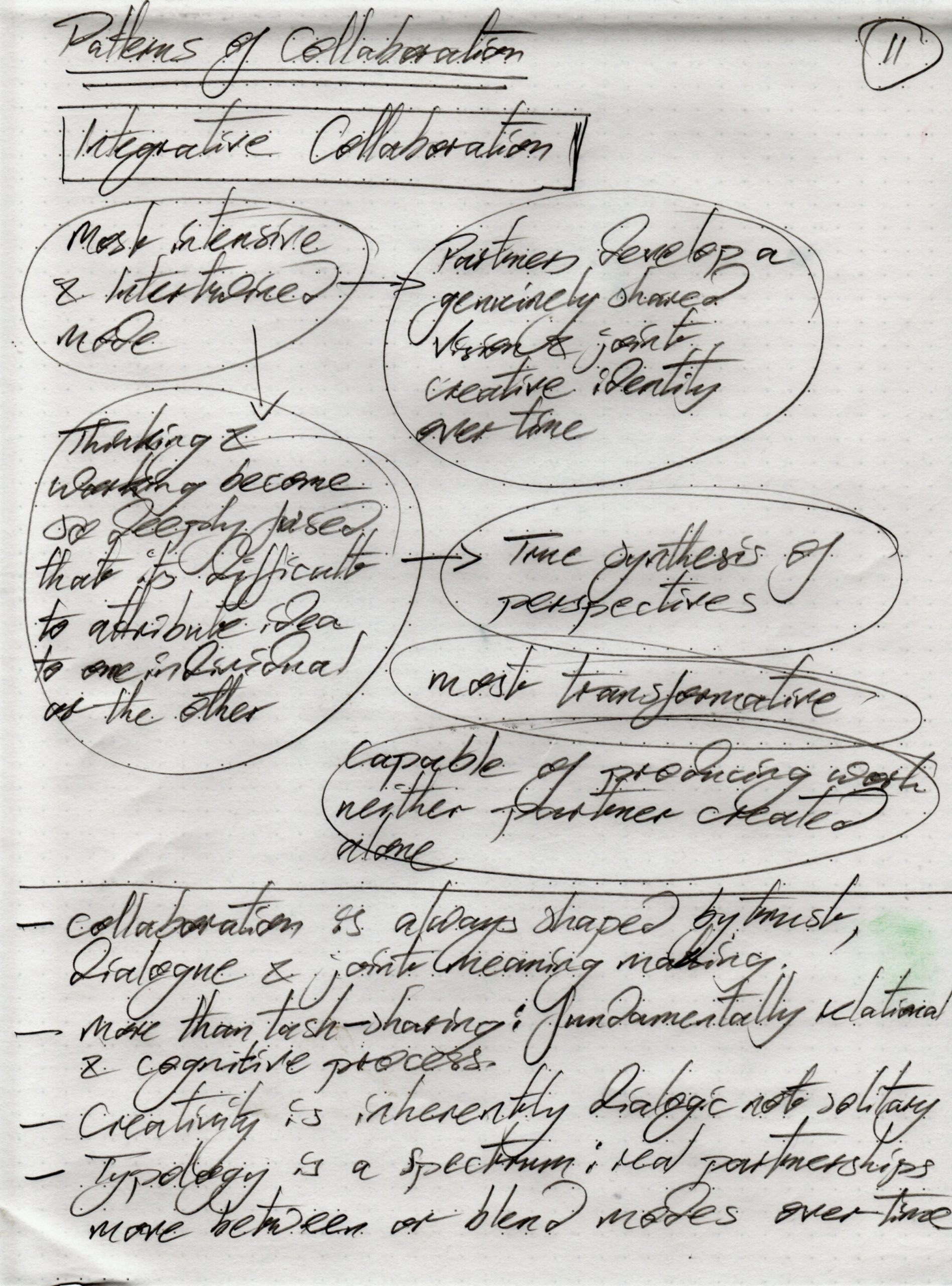
Integrative Collaboration
- Transforms the field and its participants
- Collaboration partners frequently suspend their differences in style
- Can experience a profound sense of bonding
- Most intensive and intertwined mode
- Partners develop a shared vision and joint creative identity over time
- Thinking and working become so deeply fused that it’s difficult to attribute idea to one individual or another
- True synthesis of perspectives
- Most transformative mode
- Capable of producing work neither partner created alone
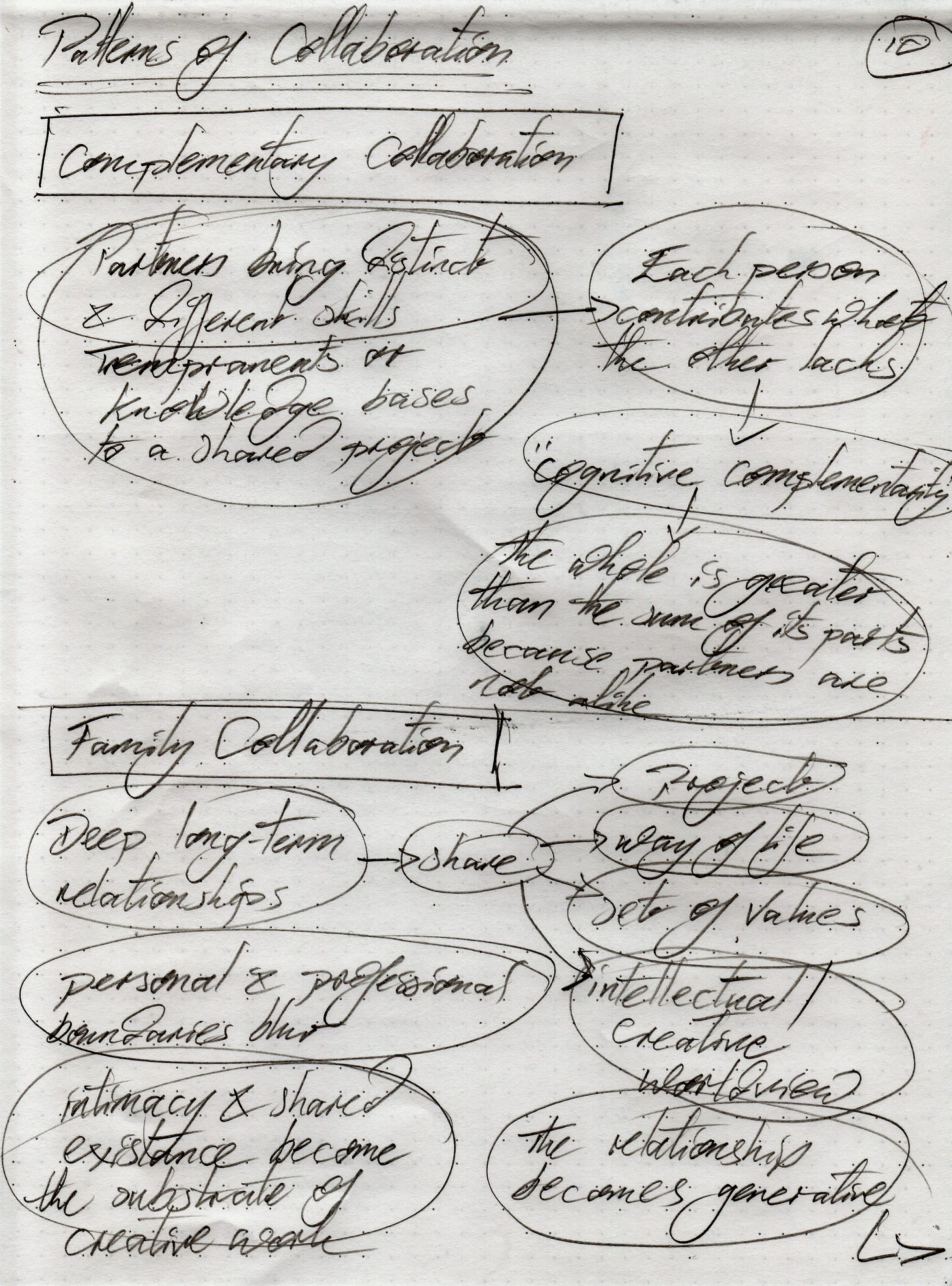
Complementary Collaboration
- Differences in skill, training and temperament support a joint outcome through division of labour
- Specialised disciplinary knowledge and contrasting modes of thinking play roles
- Partners bring distinct and different skills, temperaments or knowledge bases to a defined shared project
- Each person contributes what the other lacks
- “Cognitive complementarity”
- The whole is greater than the sum of its parts because partners are not alike
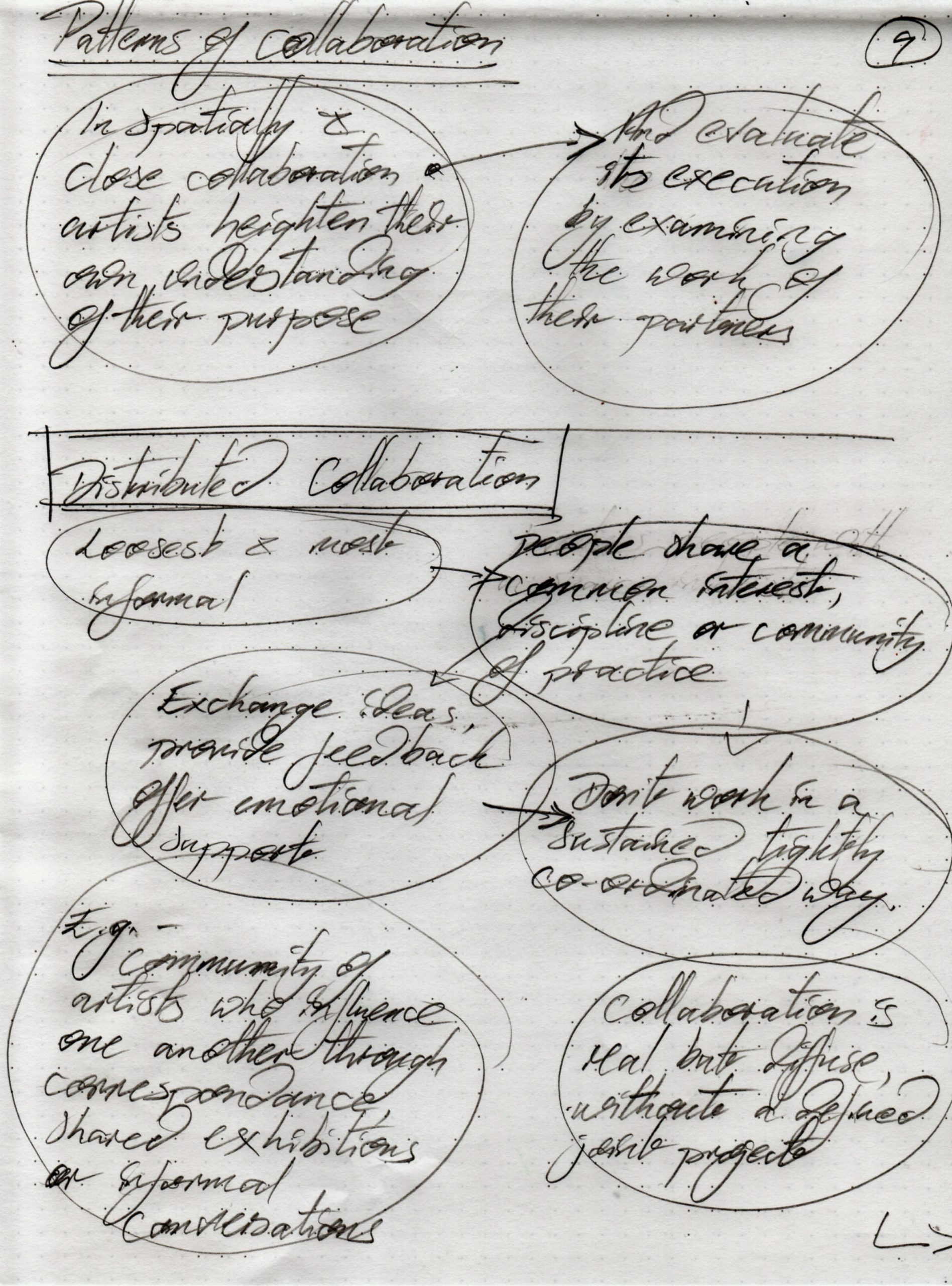
Distributed Collaboration
- Loosest and most informal
- People share a common interest, discipline or community of practice
- They exchange ideas, provide feedback, offer emotional support
- Don’t work in a sustained tightly co-ordinated way
- Collaboration is real, but diffuse, without a defined joint project
- E.g. a community of artists who influence on another through correspondence, shared exhibitions or informal conversations
Family Collaboration
- Deep long term relationships
- Collaborators share projects, a way of life, a set of values, an intellectual/ creative world view[
- Personal and professional boundaries blur
- Intimacy and shared existence become the substrate of creative work
- The relationship becomes generative
- Possibility of friction causing toxicity
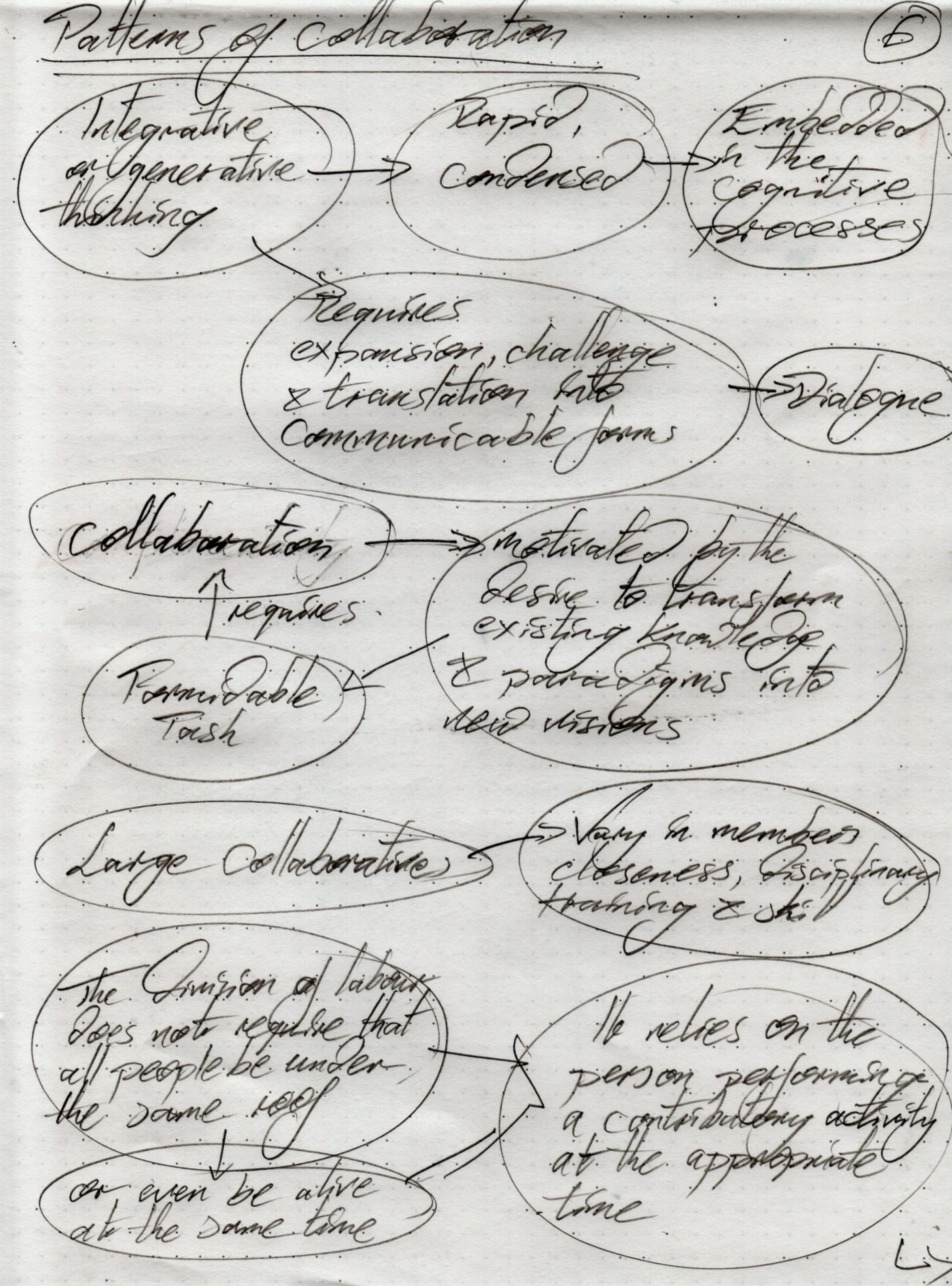
- Collaboration is often motivated by the desire to transform existing knowledge and paradigms into new visions
- Collaboration should not always be considered as people working in close proximity: The division of labour does not require that all people are under the same roof – or even being alive at the same time
- Collaboration relies on a person ‘performing’ a contributory activity at the appropriate time
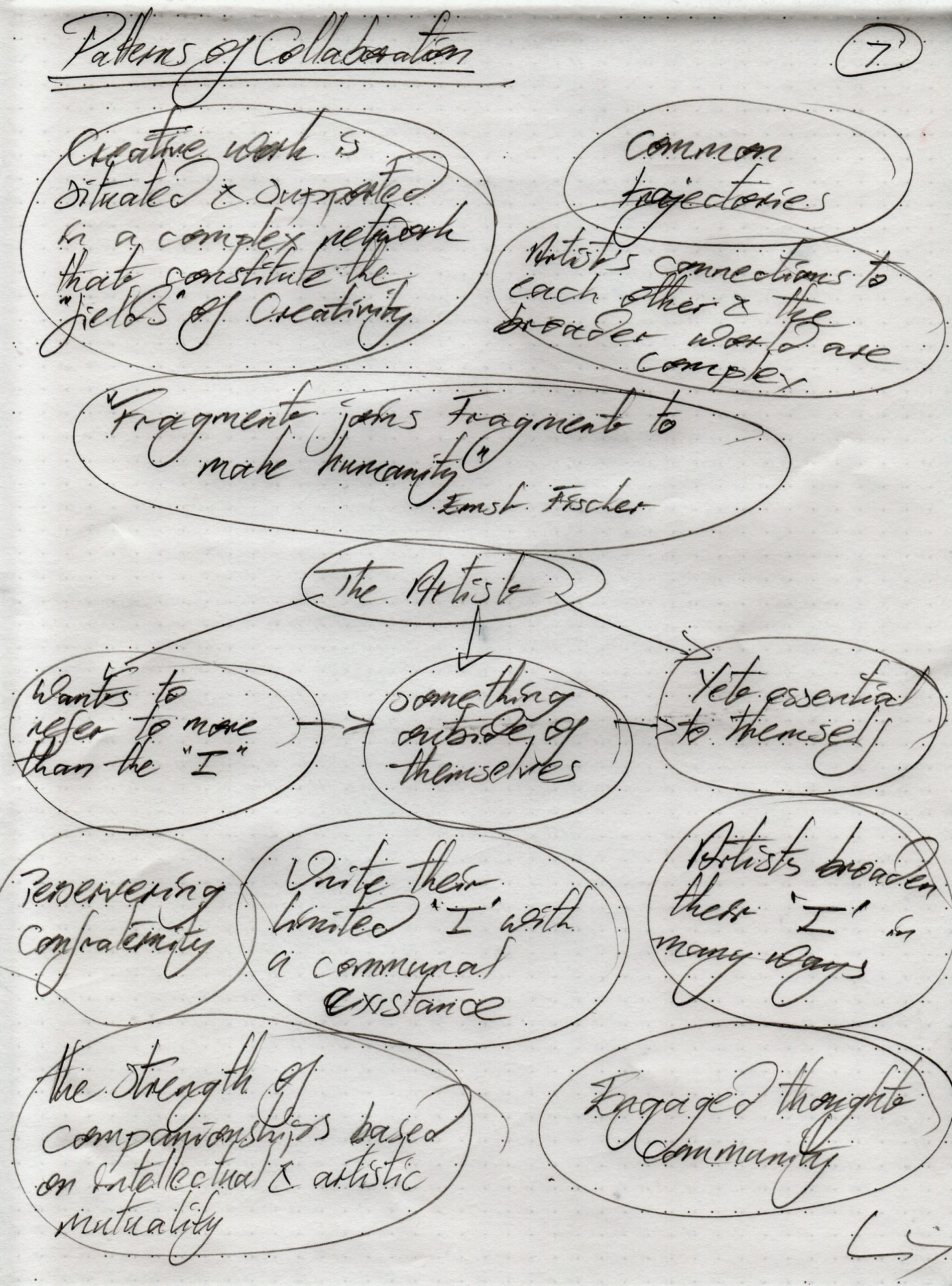
- Creative work is situated and supported in a complex network that constitutes the “fields of creativity”
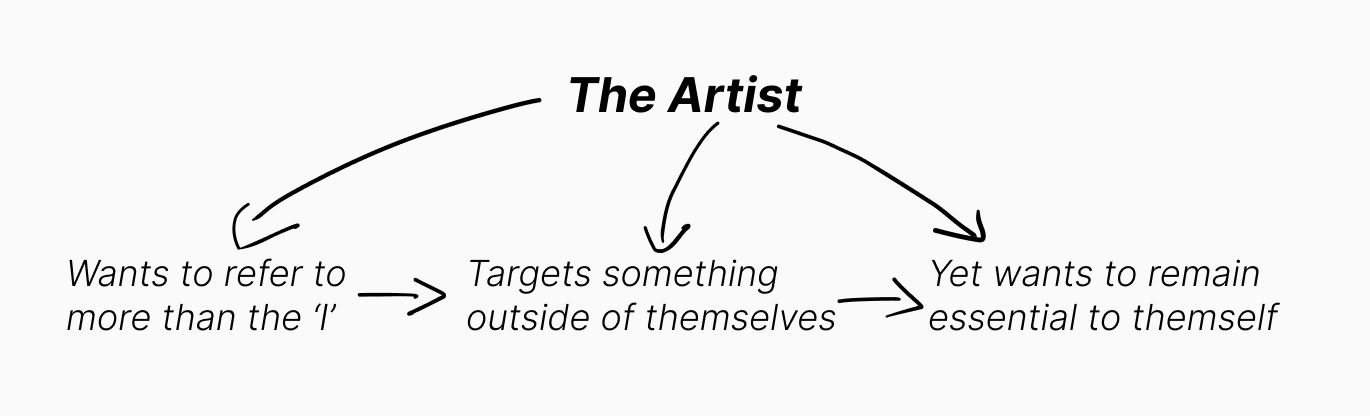
- Creatives want to unite their limited ‘I’ with a communal existence, whilst retaining a strong, grounded sense of themselves
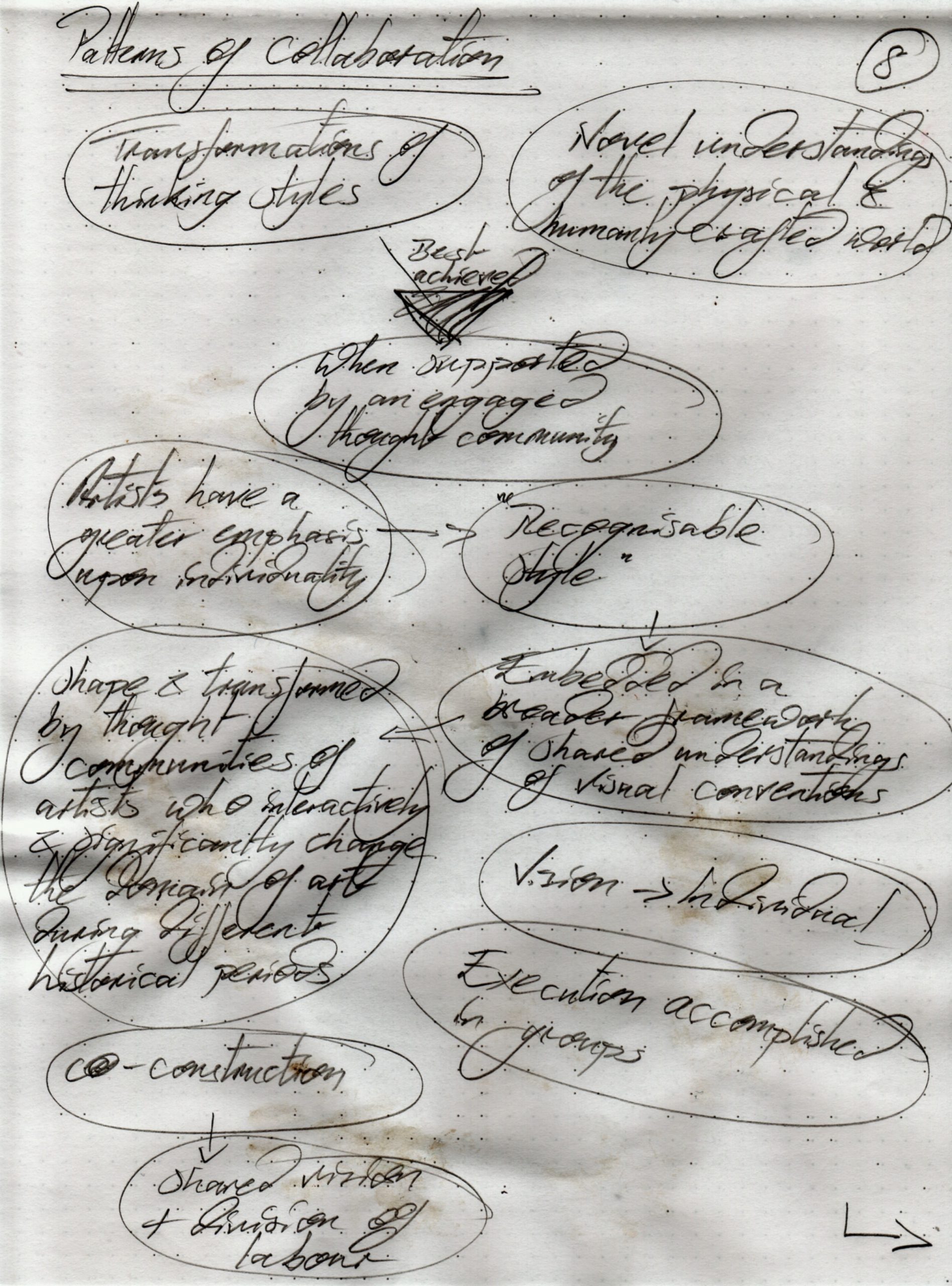
- Transformation of thinking styles and the development of a novel understanding of the physical and humanly crafted world are best achieved when supported by an engaged thought community
- In spatially and close collaboration, artists heighten their own understanding of their purpose. They evaluate the execution of their purpose by examining the work of their partners and peers
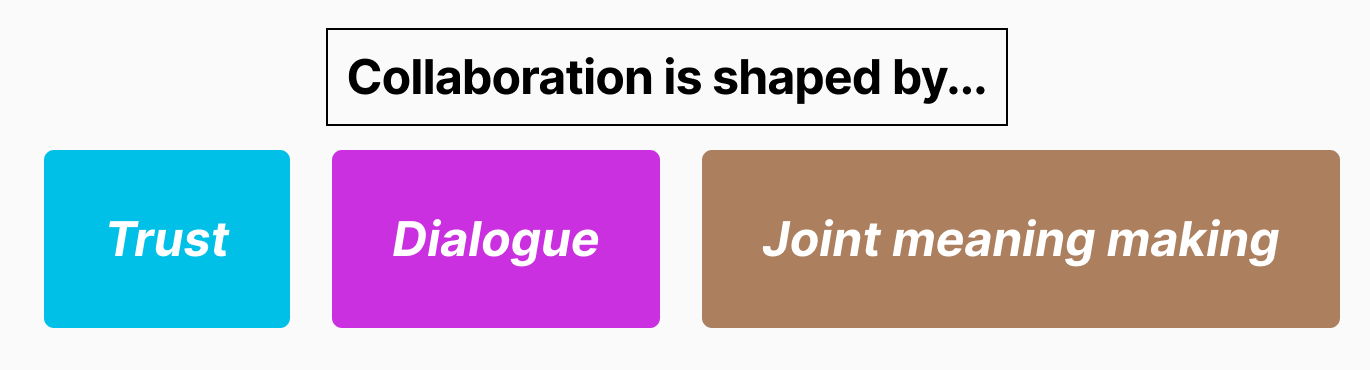
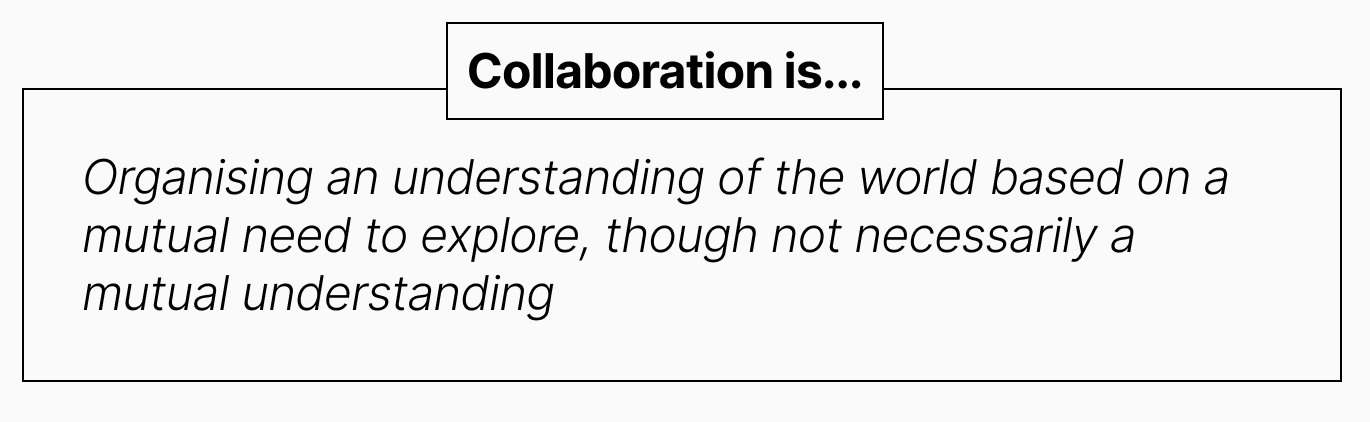
- Collaboration is more than task sharing: it’s fundamentally a relational and cognitive process
- Creativity is inherently dialogic (based on dialogue, conversation, and the shared construction of meaning), not solitary
- In practice, collaboration is a spectrum: real partnerships move between or blend modes over time
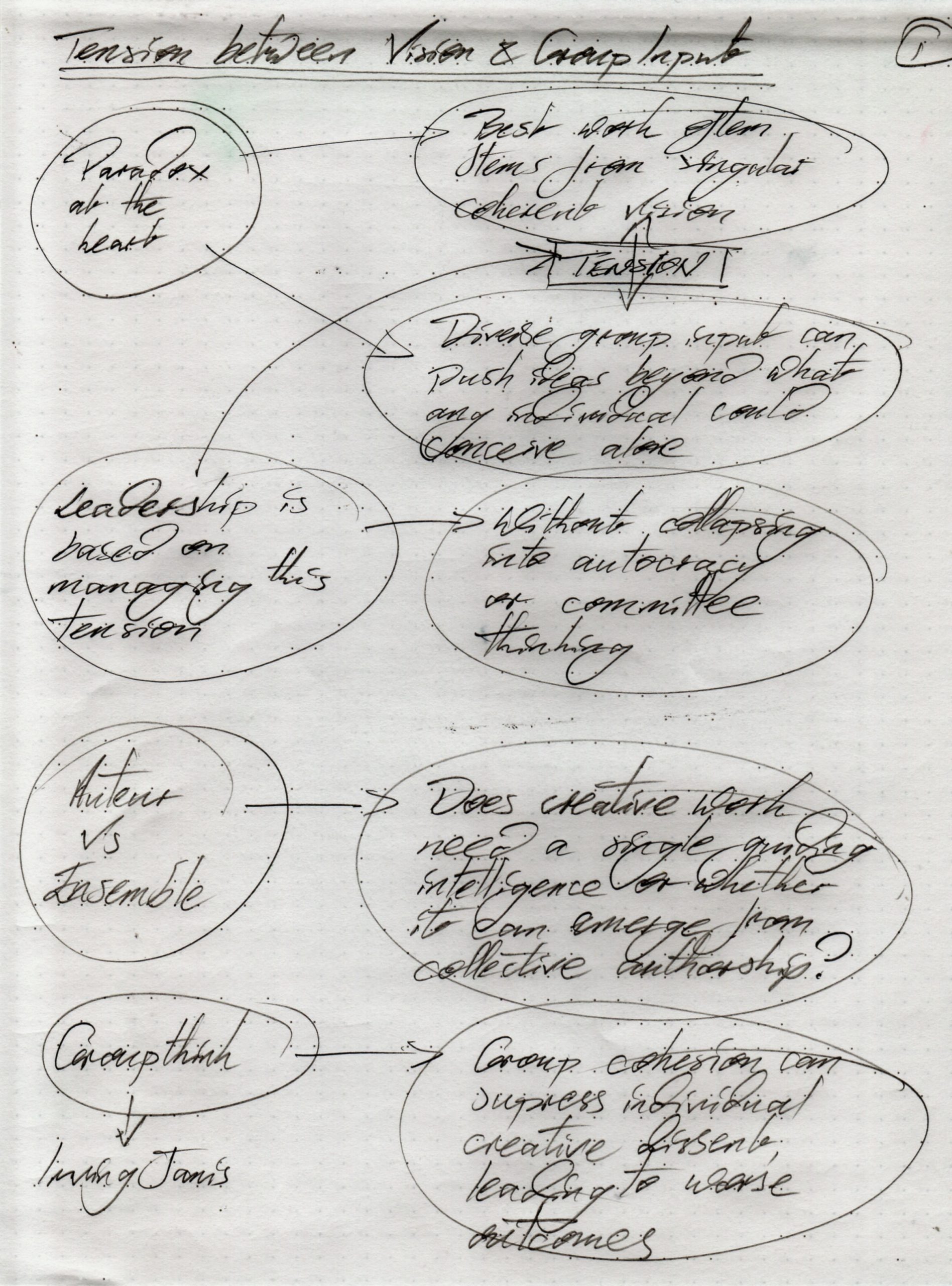
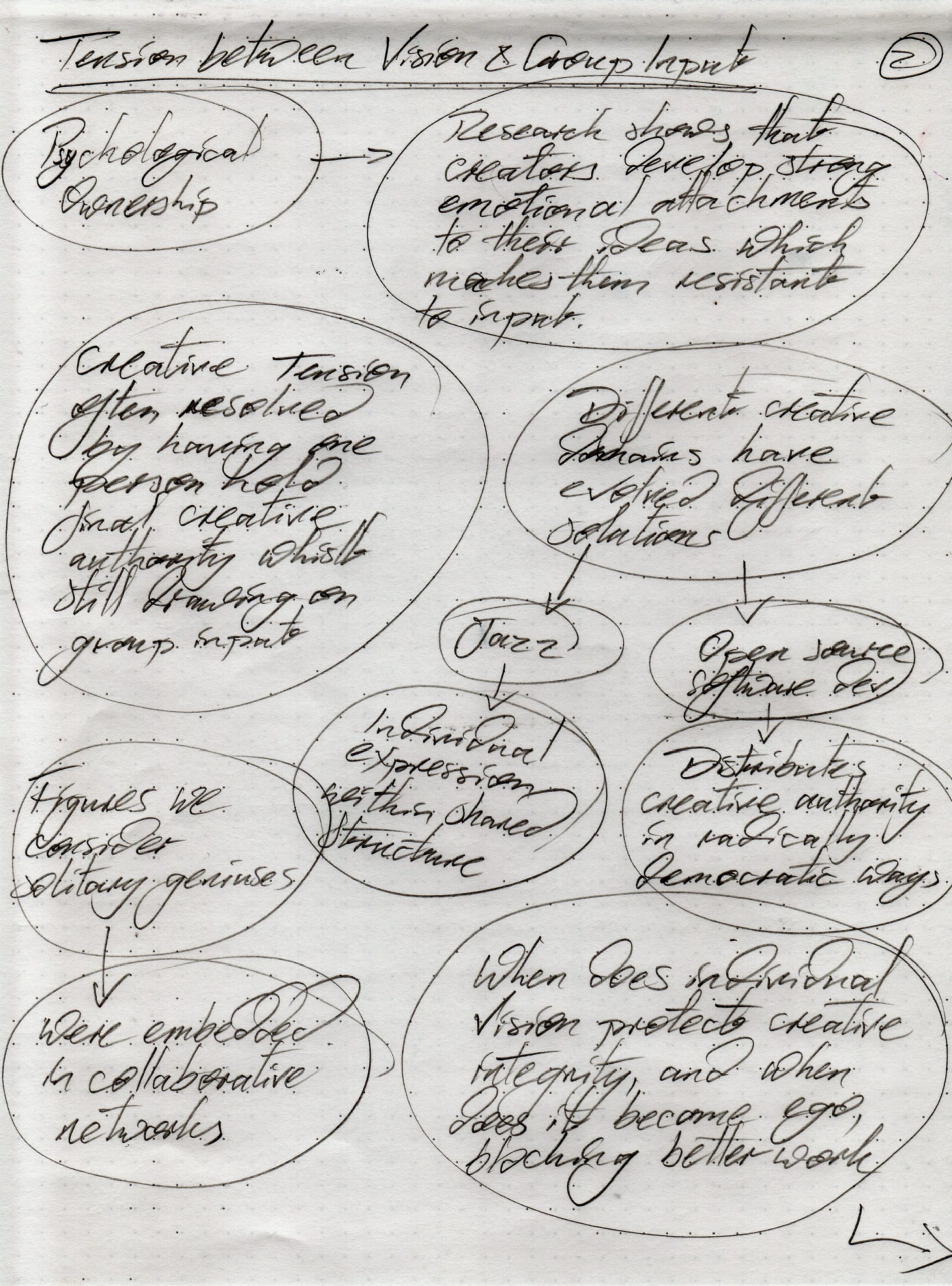
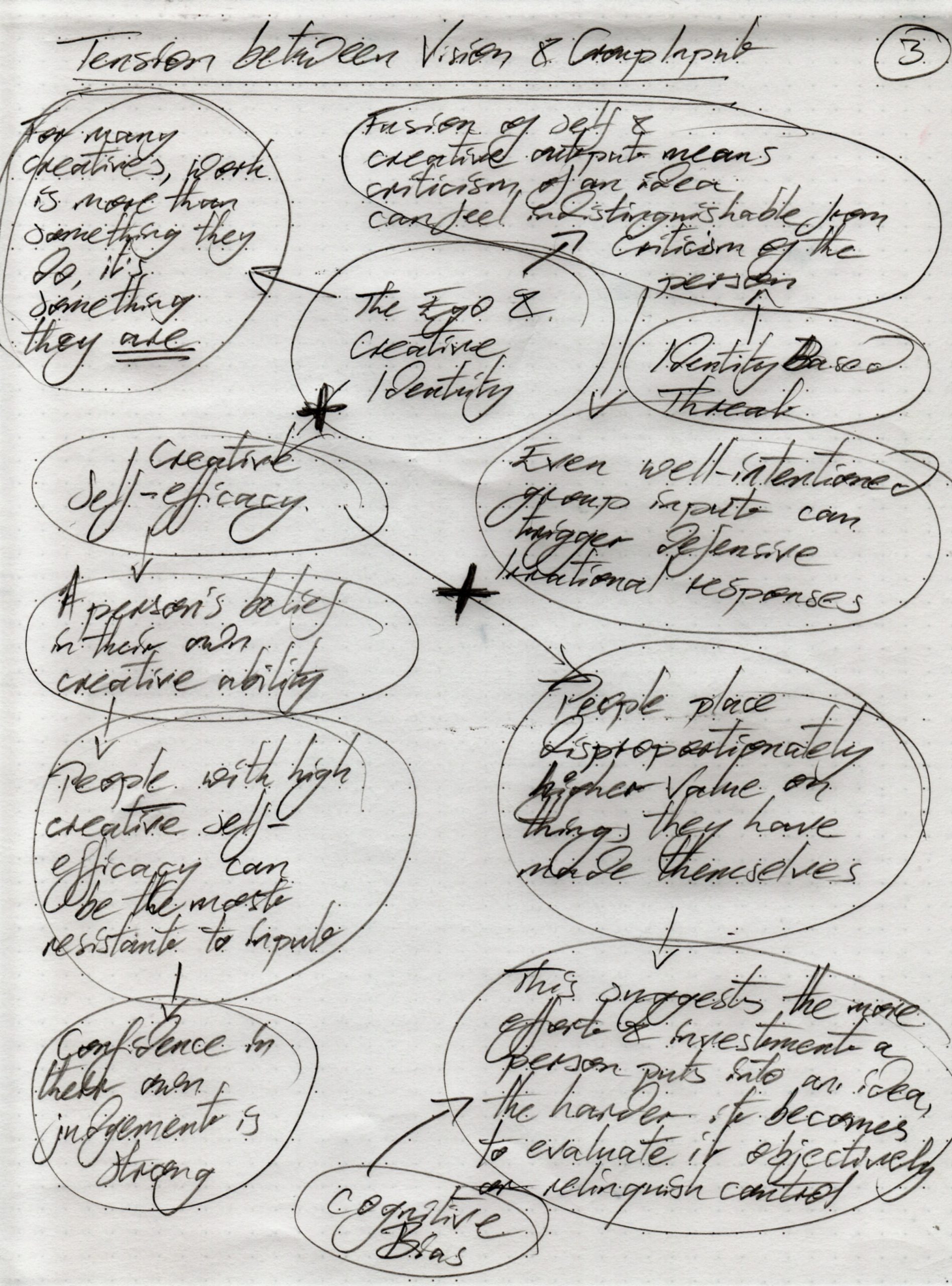
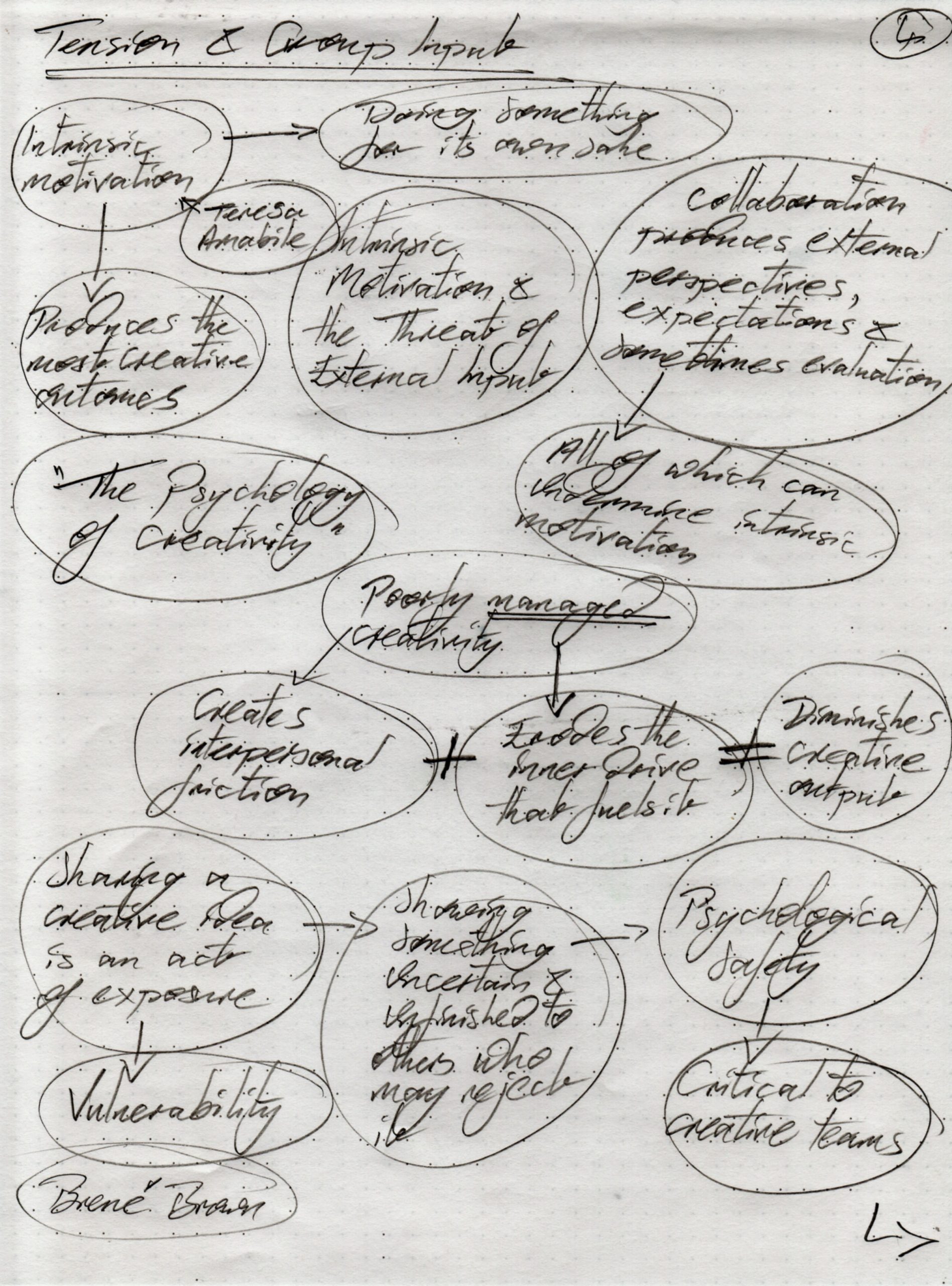
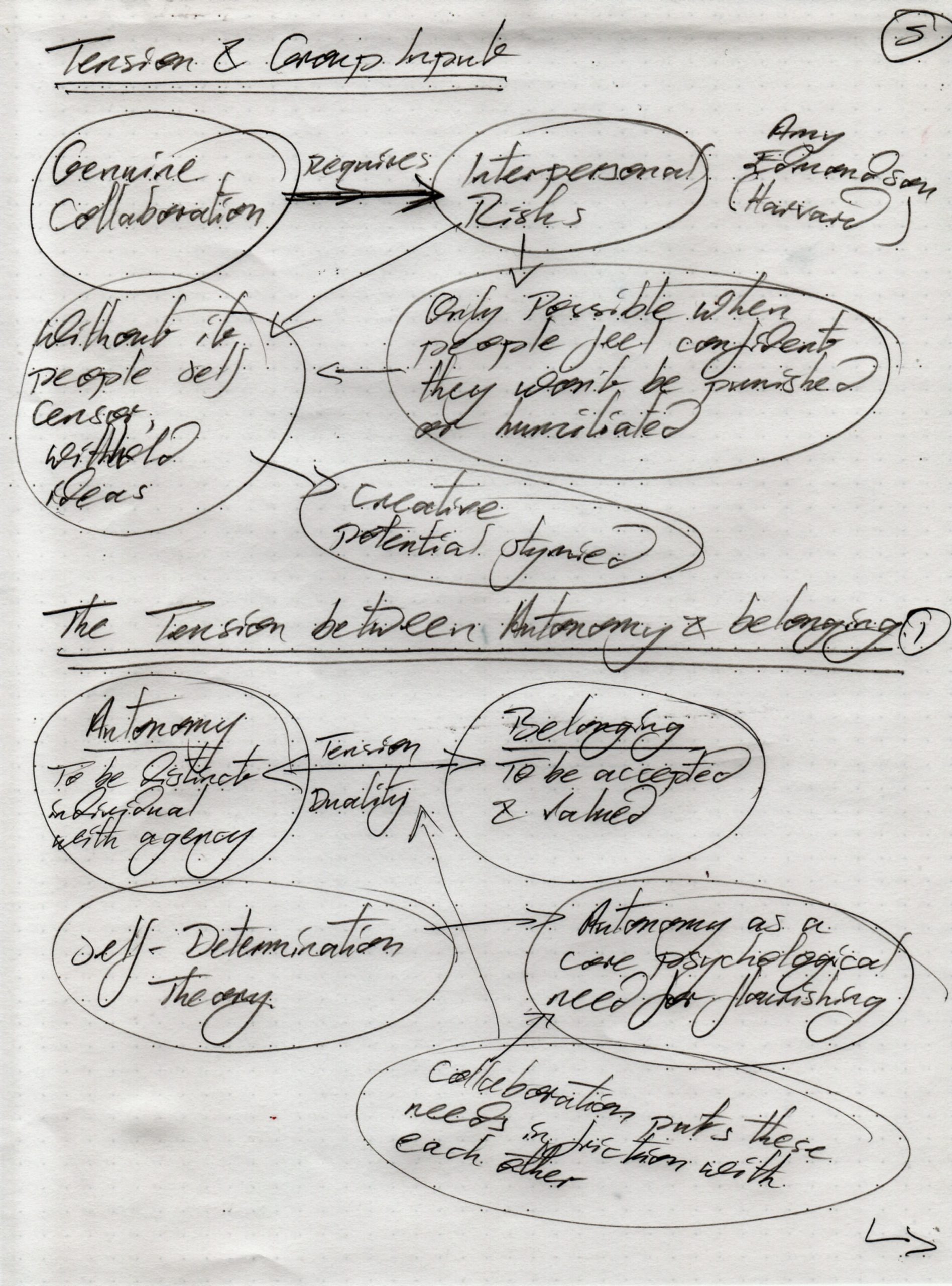
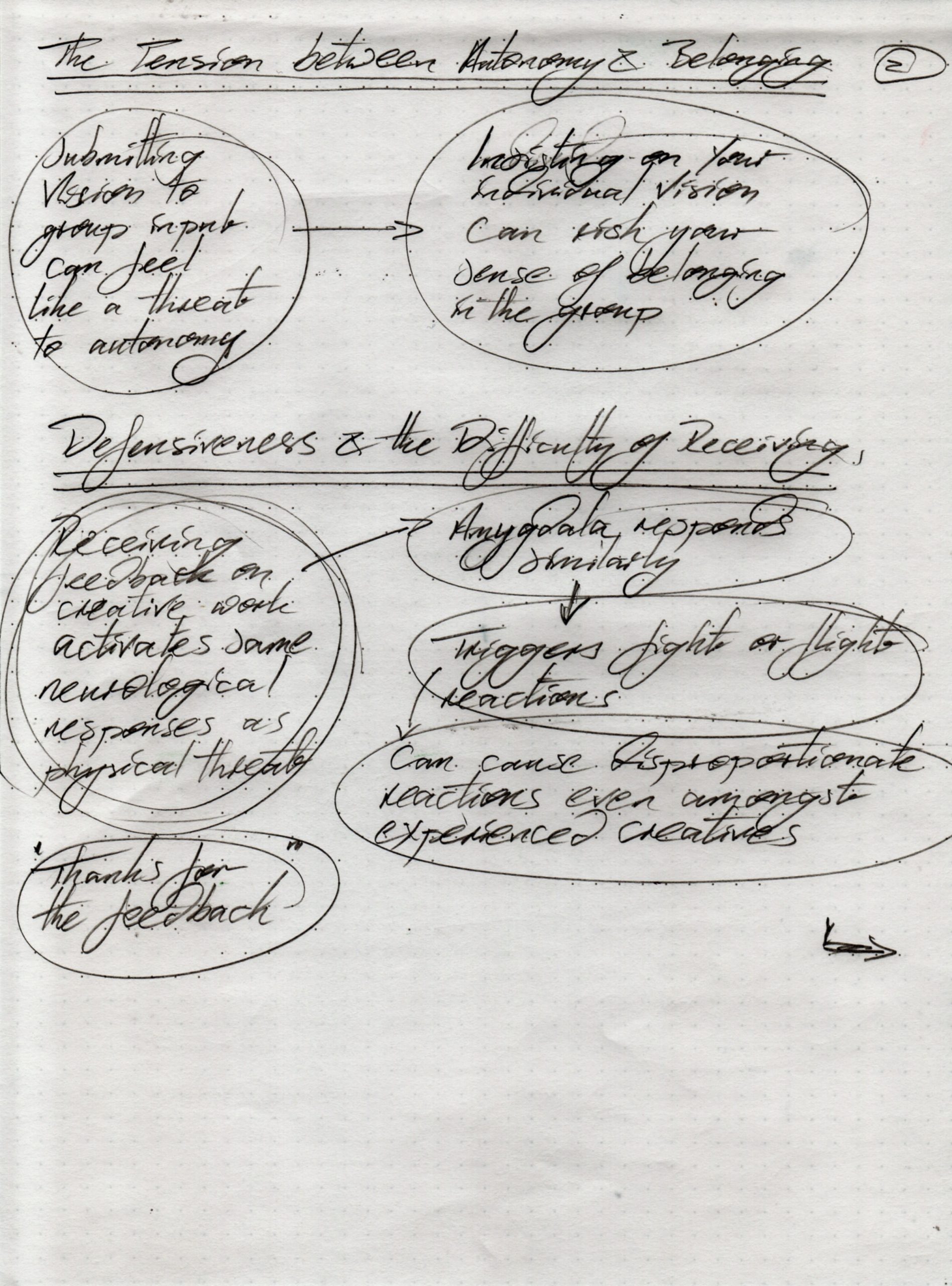
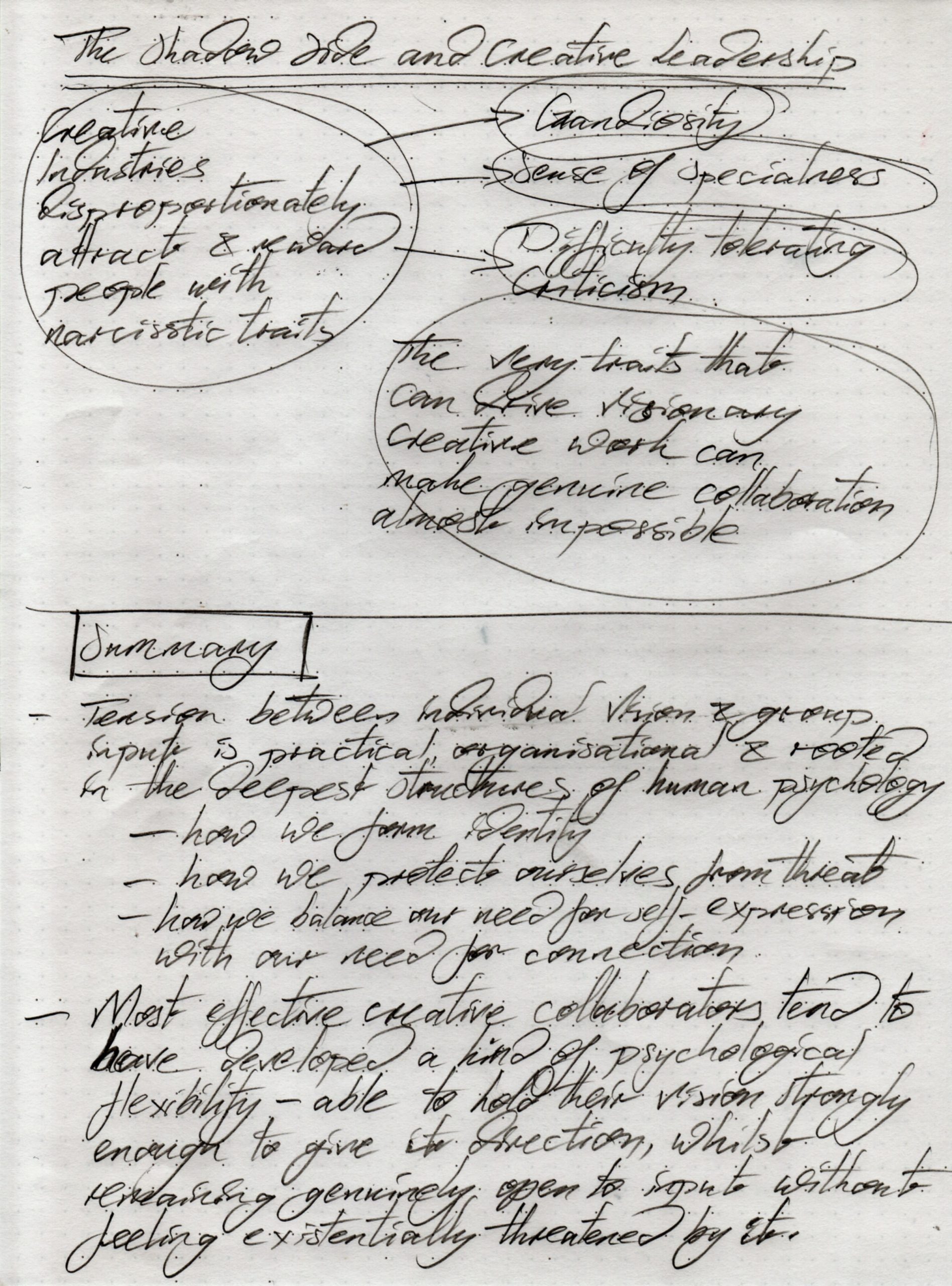
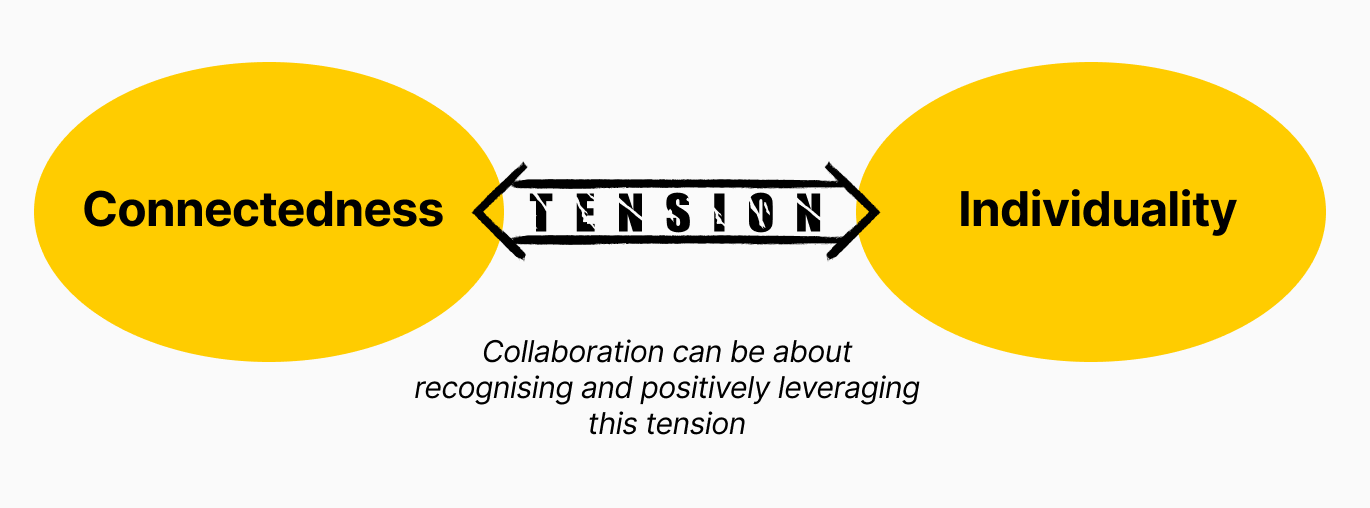
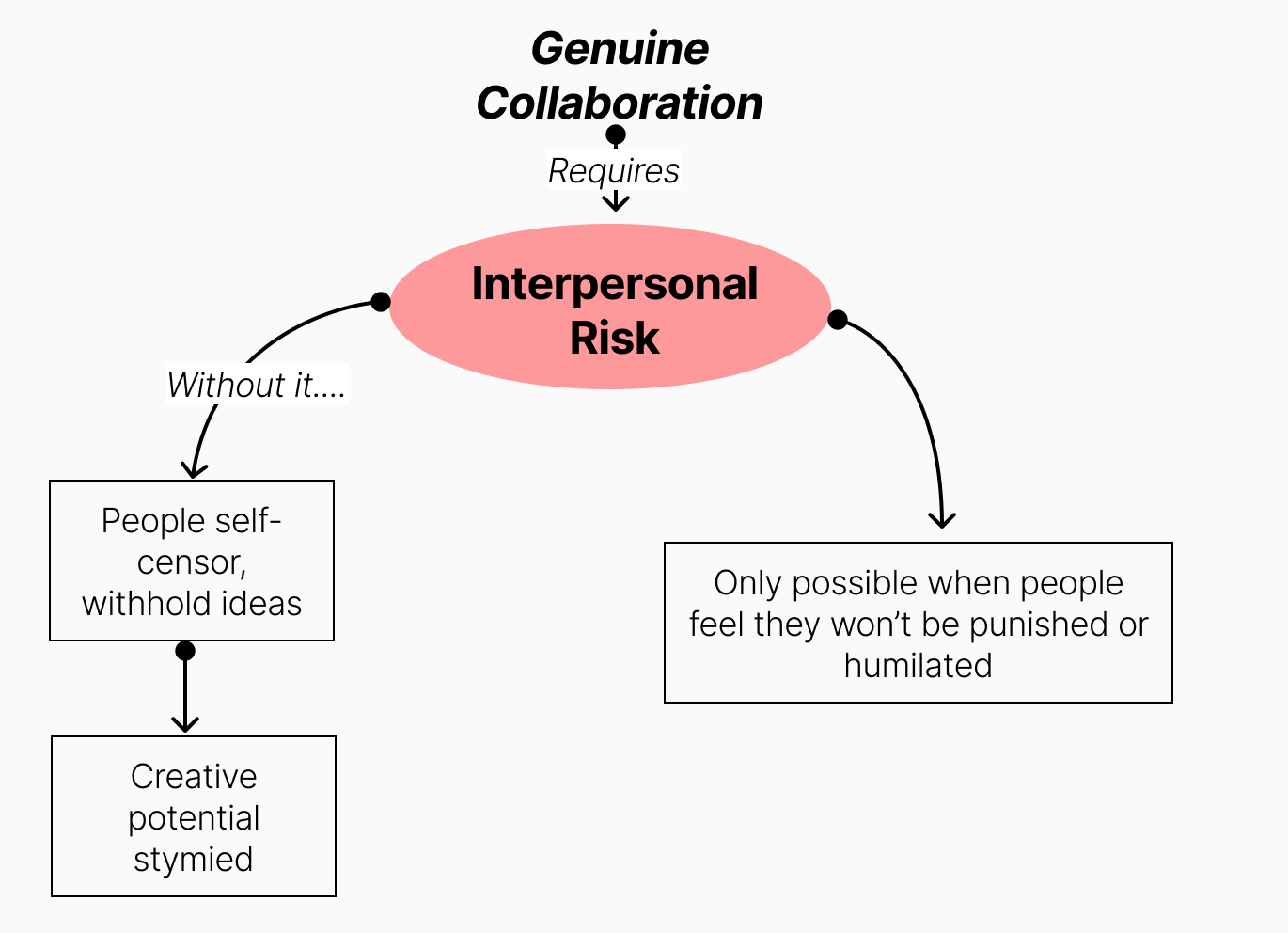
- Tension between individual vision and group input is practical, organisational and rooted in the deepest structures of human psychology
- How we form identity
- How we protect ourselves from threat
- How we balance our need for self expression with our need for connection
- Most effective creative collaborators tend to have developed a kind of psychological flexibility – able to hold their vision strongly enough to give it direction, whilst remaining genuinely open to input without feeling existentially threatened by it

Research Notes