
Notes
“I cannot act in the world before understanding the world.” (Jaar, 2022 cited in Zuckerman 2022.)
“I wanted to show these images to people. I wanted them to see them, and I thought, I’m going to use this strategy of repetition. I want to show that footage once, twice, three times, at normal speed. I want to slow it down. I want people to see. I want this information to enter their beings.” (Jaar, 2022 cited in Zuckerman 2022.)
These are two examples of making something visible by making an object or a video out of it. There’s this idea of object journalism, right? Looking at an object and seeing what it testifies to, what it’s seen. And then there’s this idea that you do, which is making an object out of journalism. (Jaar, 2022 cited in Zuckerman 2022.)
“One thing that happens with the greatest failures, the greatest exercises, is that you still learn something.” (Jaar, 2022 cited in Zuckerman 2022.)
“There is no way we can produce anything and put it out in the world, without [it] being an ethical decision and an aesthetic decision.” (Jaar, 2022 cited in Zuckerman 2022.)
“Covid, for me, was a realization that, whatever happens in the world, it’s still so obvious, so transparent, that the inequity that exists will be visible through these new tragedies.” (Jaar, 2022 cited in Zuckerman 2022.)
“And the way you’re looking at those two cases, is a very clear example of synthesizing for an insight, which is what you do. You look at stories across, and you pull pieces of disparate information to create a new thought” (Zuckerman 2022.)
Images are important, because images are not innocent. Each image and every image that we produce contains a conception of the world. Most of the images we are confronted with in our daily lives have been created by experts in communications at the service of a system of consumption: they exist to sell us products, and ideas. As a recent work of mine suggested, “we do not take photographs, we make them.” And those making them today are producing invitations to consume, consume, consume. And in that sea of consumption, it is very difficult for an image of pain to survive: it is drowned. (Jaar, 2014.)
Context is everything. I need to understand the context before creating a work. That is why my modus operandi has always been the same: before acting in the world, I need to understand the world. That understanding is the result of a long period of research that can last years. Only when I reach what I believe is a critical amount of knowledge, when I feel that I have acquired a responsible amount of information about the context, only then I dare to start articulating possible ideas. (Jaar, 2014.)
My work is not medium-specific but idea- specific. The final project is an idea that requires a medium. And that medium is at the service of the idea. (Jaar, 2014.)
How do you make art out of information that most people would rather ignore? (Jaar, 2014.)
I am not a studio artist, but a project artist. All my work is born as a reaction to the reality that surrounds me…. Chinua Achebe wrote that “Art is man’s constant effort to change the order of reality that was given to him”. That is what I try to do. I still do not know how to change this order of reality, but I am trying hard. It is also clear to me that my work is always born out of chaos. (Jaar, 2014.)
the artist toys with the mechanisms of trauma, reprogramming the shock dynamics of trauma and substituting the aesthetics of the wound with the ‘document’, which I understand as ‘the contextualisation and integration of image and event beyond and against the politics of global information’. In the ‘document’, the post-traumatic gaze is both revived and buried, acknowledged and mourned. The space of denial, which is a matter of shock or politics, is obliterated in the time and space of the ‘document’ where the viewer can finally encounter, engage with and be present in the missed encounter of the traumatic event. (Chow, 2008)
Only the ‘document’, where an image and reality are coupled and integrated, can do justice to the complexity, genesis and destiny of the event which by far exceeds the frame of the image (Chow, 2008)

Fig.1 Mea Culpa (2022)
Fig2. The Garden of Good and Evil (2017)
“A number of steel cells, just large enough to house a standing or crouched body, represent ‘black sites’, the secret detention facilities operated by the United States Central Intelligence Agency (CIA) and used to interrogate suspects. Known sites include Guantanamo Bay in Cuba, as well as locations in Romania, Italy, Poland, Lithuania, Thailand, Kenya and Egypt.
Enigmatic and alone, one cell stands in the lake. The remaining cells are partially obscured from view within an adjacent area of woodland, in the same way that the ‘black sites’ are hidden and shrouded in secrecy. As we walk up the slope and amongst the trees, the steel structures are slowly revealed as a disconcerting discovery in this otherwise peaceful landscape.
Each cell has a one-metre square base, drawn from the poem One Square Metre of Prison by Palestinian poet Mahmoud Darwish, who was imprisoned many times and spent much of his life in exile. The poem and Jaar’s work remind us of the privilege of freedom and the power of the human imagination.” (YSP,s.d.)
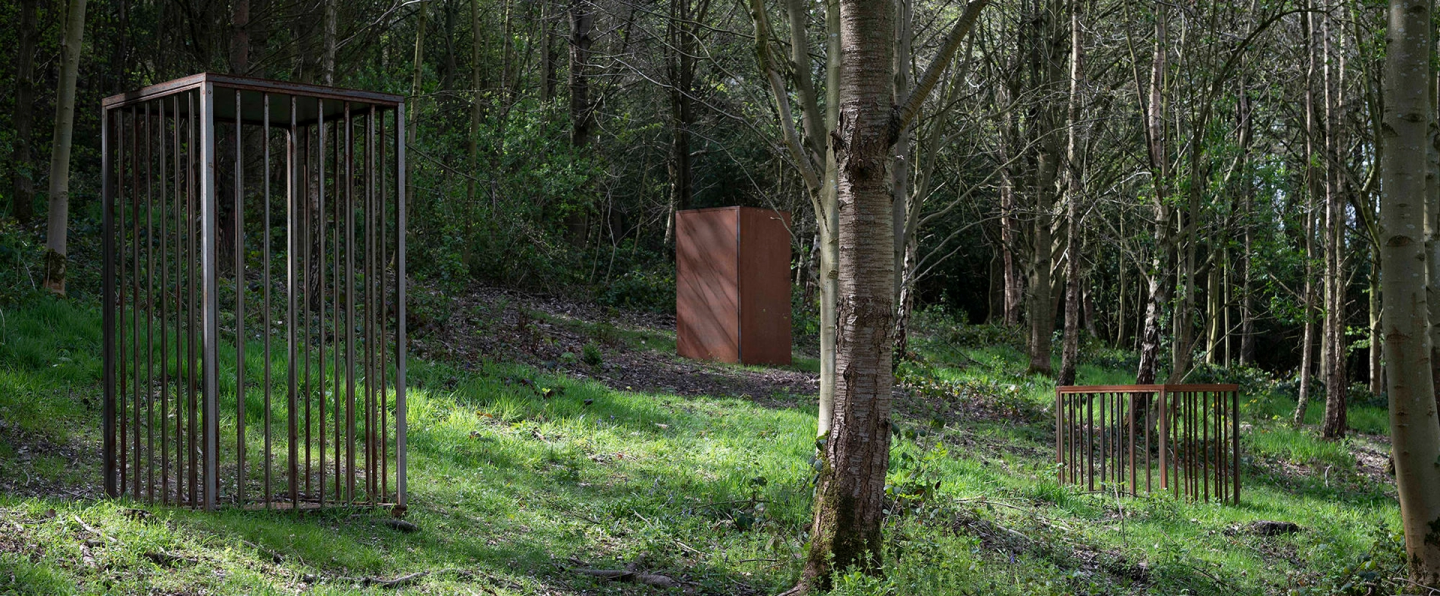
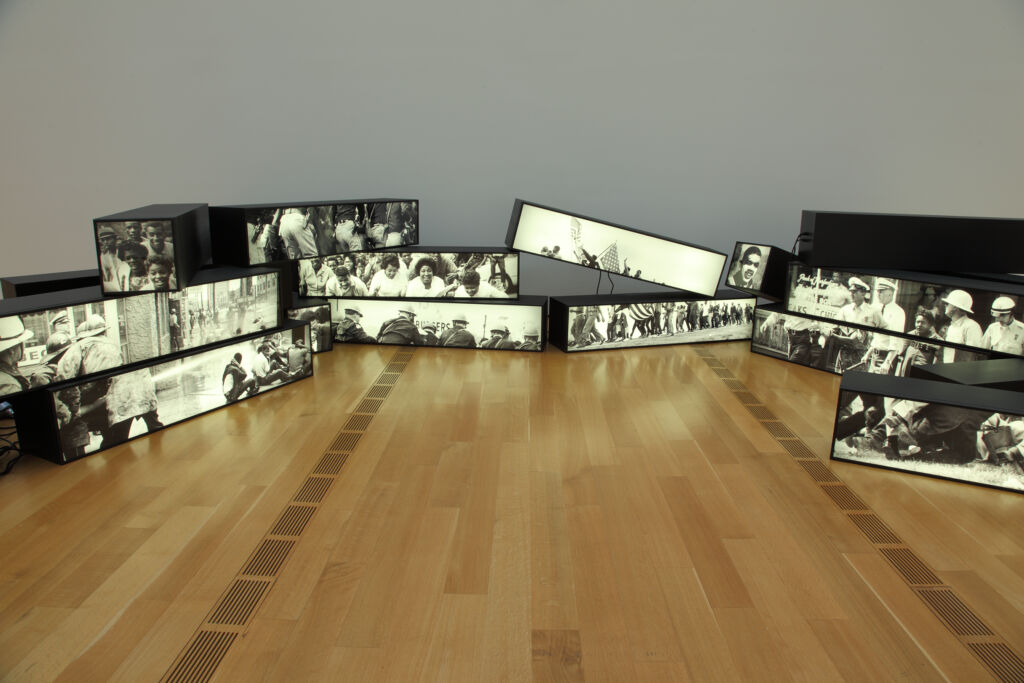
Fig.3. The Fire Next Time (1989)
When Alfredo Jaar arrived in New York from his native Chile in 1981, he was shocked at the pervasiveness of racial inequality in the United States. Using enlarged and fractured newspaper photographs of demonstrations of the 1960s, Jaar presents a frenzied view of the struggle in The Fire Next Time, a title co-opted from James Baldwin’s 1962 novel of the same name. The chaotic stacking of light boxes—each roughly the size of a person or coffin—reflects the turbulence of the 1960s. The precarious balance of the boxes also symbolizes the continued uneasiness of race relations today. (High Museum, s.d.)
Fig.4. The Eyes of Gutete Emerita (1996)
Over a five-month period in 1994 more than one million Rwandans, mostly members of the Tutsi minority, were systematically slaughtered while the international community closed its eyes. The Hutu militias who had been armed and trained by the Rwanda military largely carried out the killings. As a consequence of this genocide, millions of Tutsis and Hutus fled to Zaire, Burundi, Tanzania, and Uganda. Many remained in refugee camps, fearing renewed violence upon their return home.
One Sunday morning at a church in Ntamara, 400 Tutsi men, women, and children were slaughtered by a Hutu death squad. Gutete Emerita, 30 years old, was attending mass with her family when the massacre began. Killed with machetes in front of her eyes were her husband, Tito Hahinamura, 40, and her two sons: Muhoza, 10, and Matirigari, 7. Somehow Emerita managed to escape with her daughter, Marie Louise Unumaragrunga, 12. They hid in a nearby swamp for three weeks, coming out only at night in search of food. Emerita returned to the church in the woods because she had nowhere else to go. When speaking about her lost family, she gestures to corpses on the ground, rotting in the African sun. (Museum of Fine Arts, Houston, s.d.)
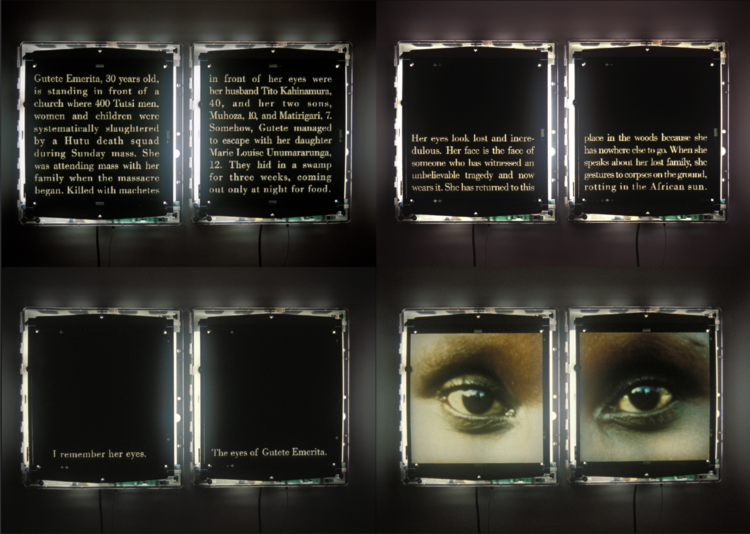
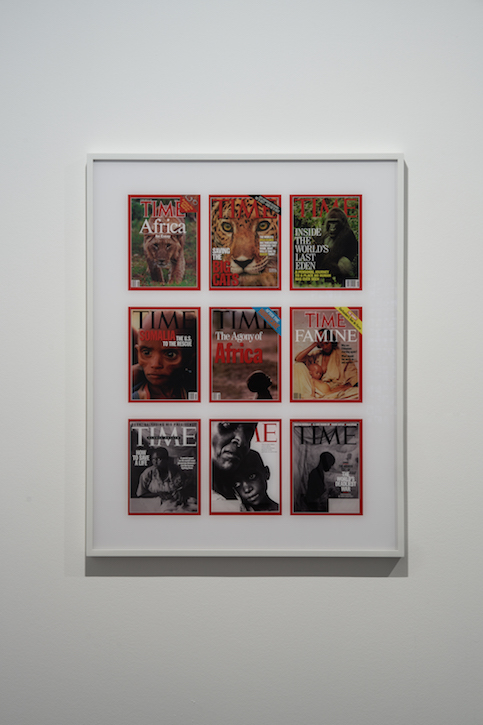
Fig.5. From Time to Time (2006)
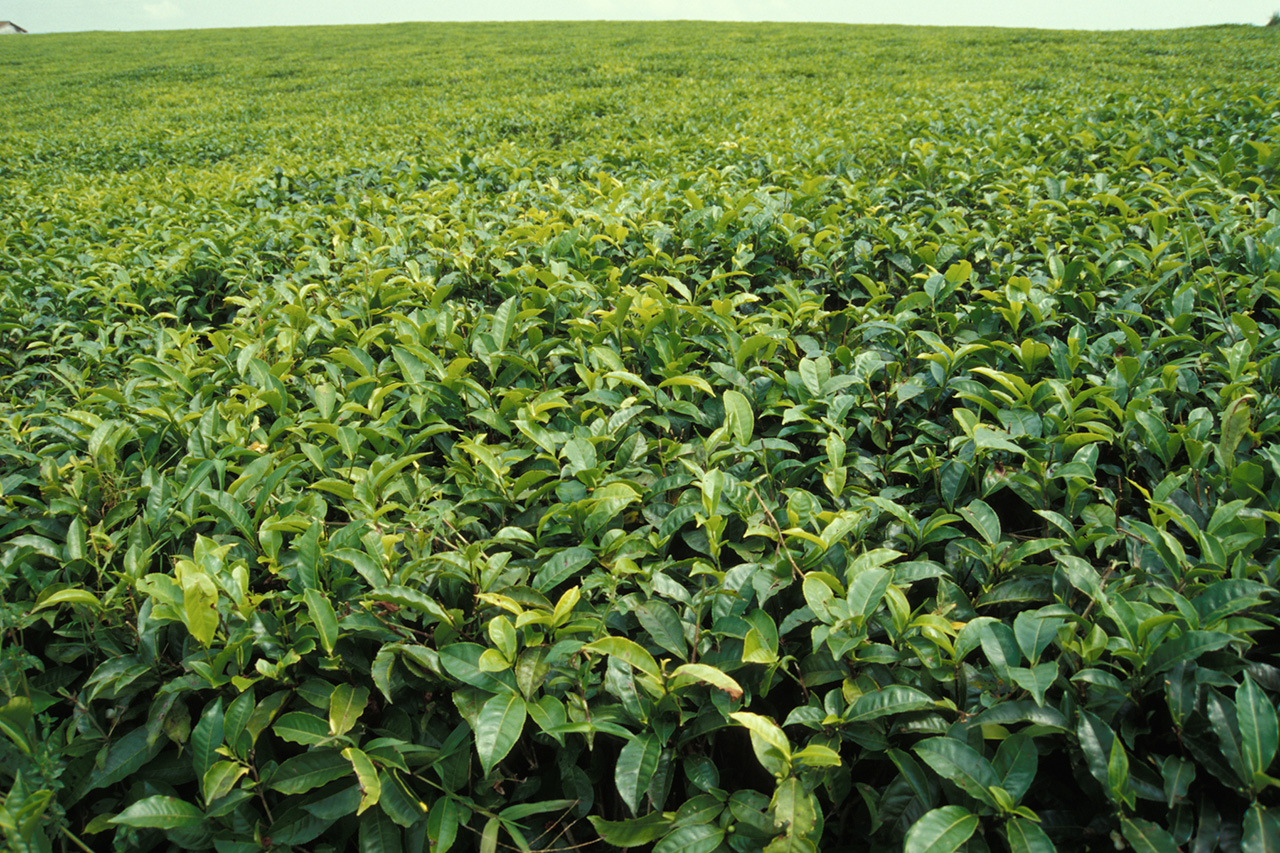
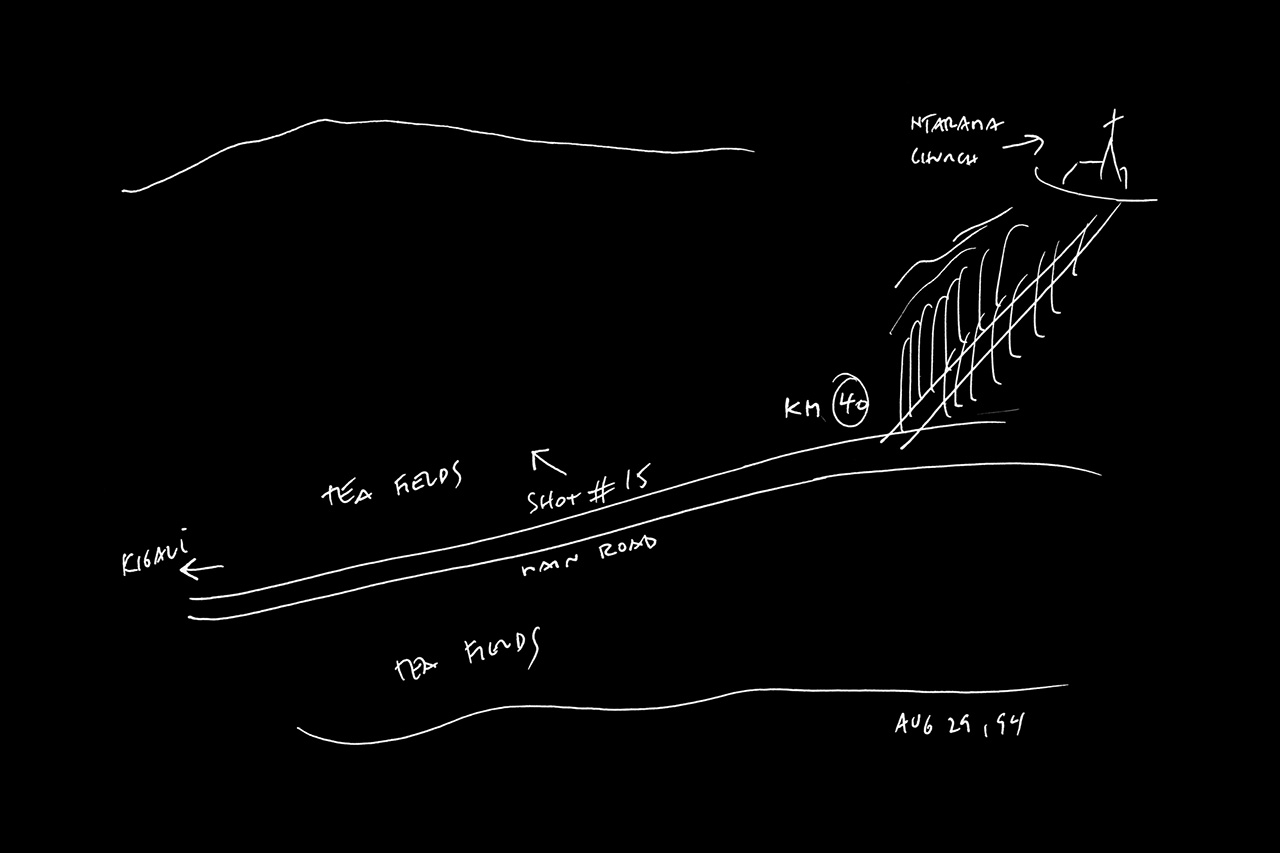
Fig.6. Field, Road, Cloud (Detail) (1997)
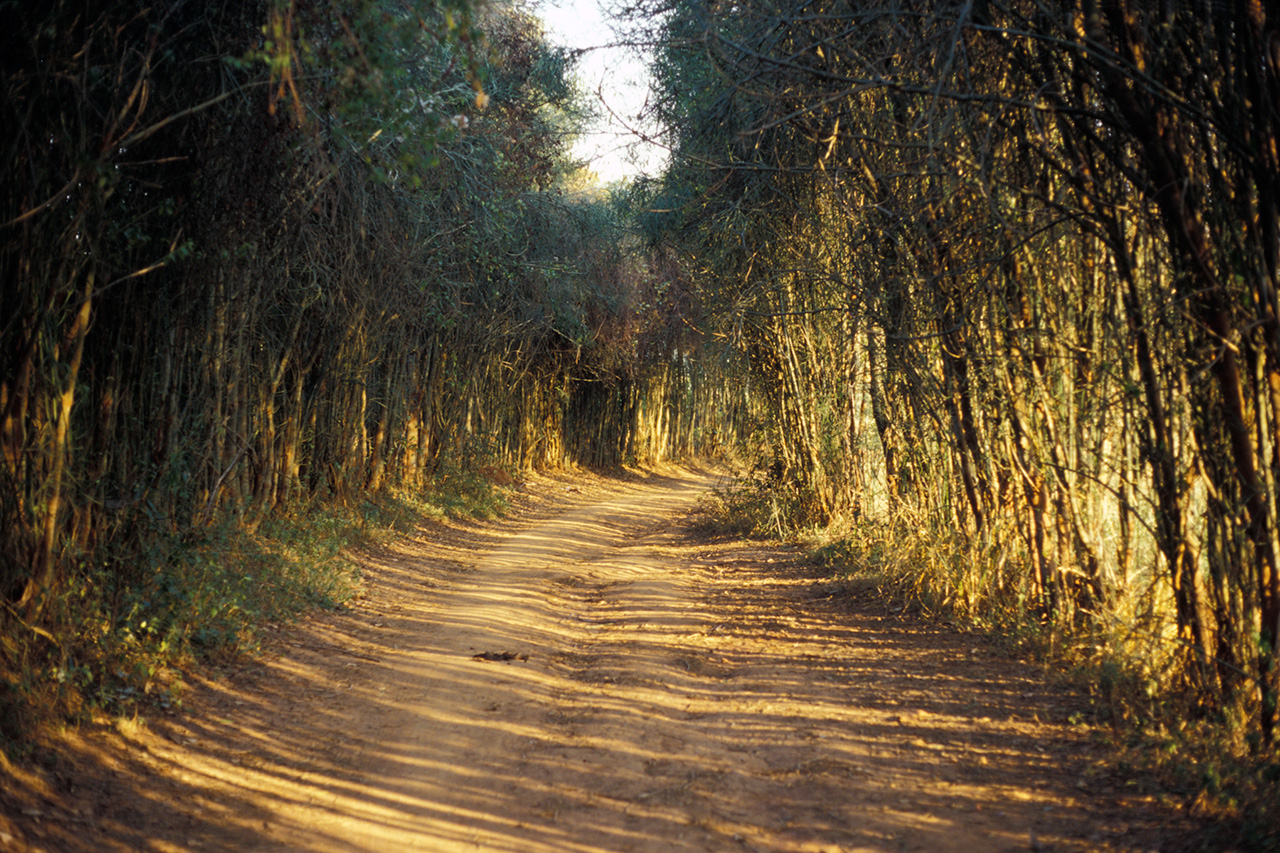
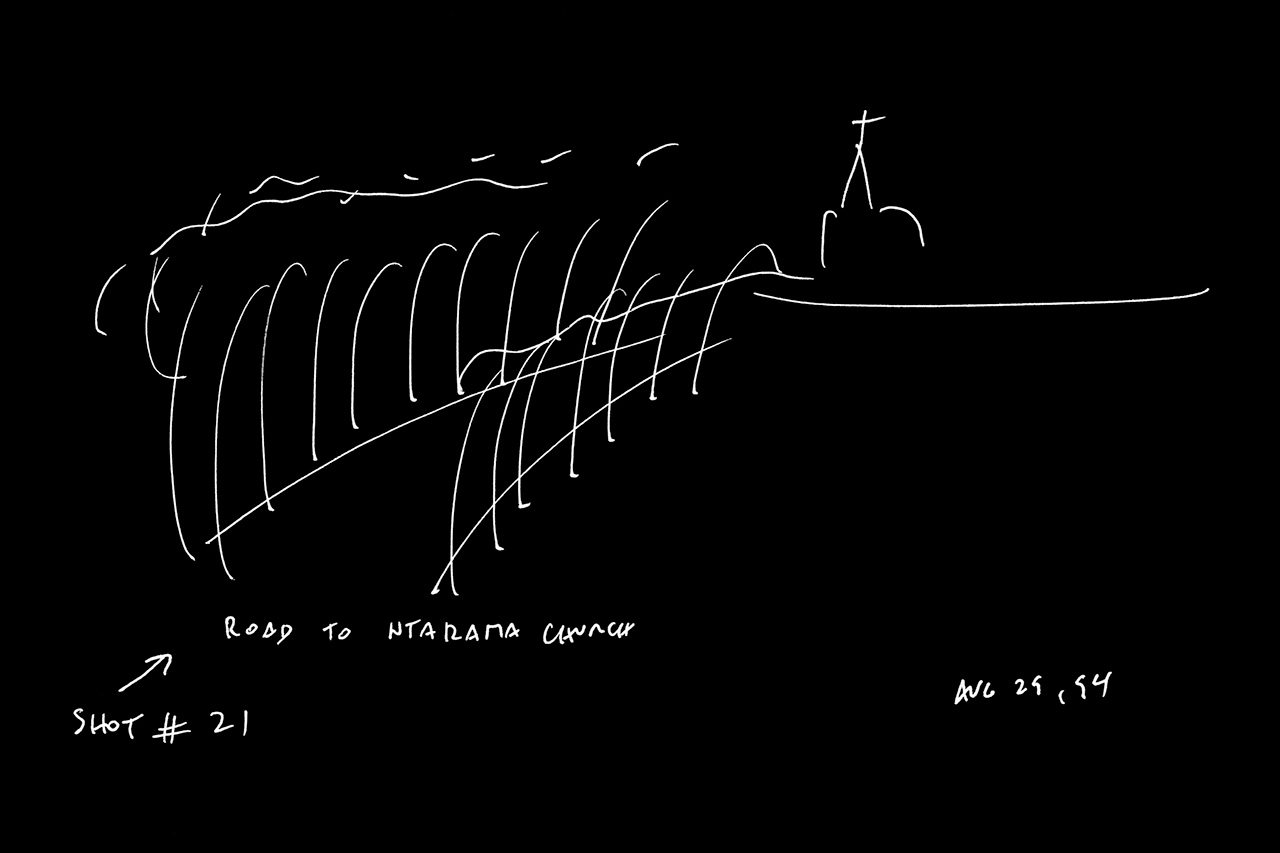
Fig.7. Field, Road, Cloud (Detail) (1997)
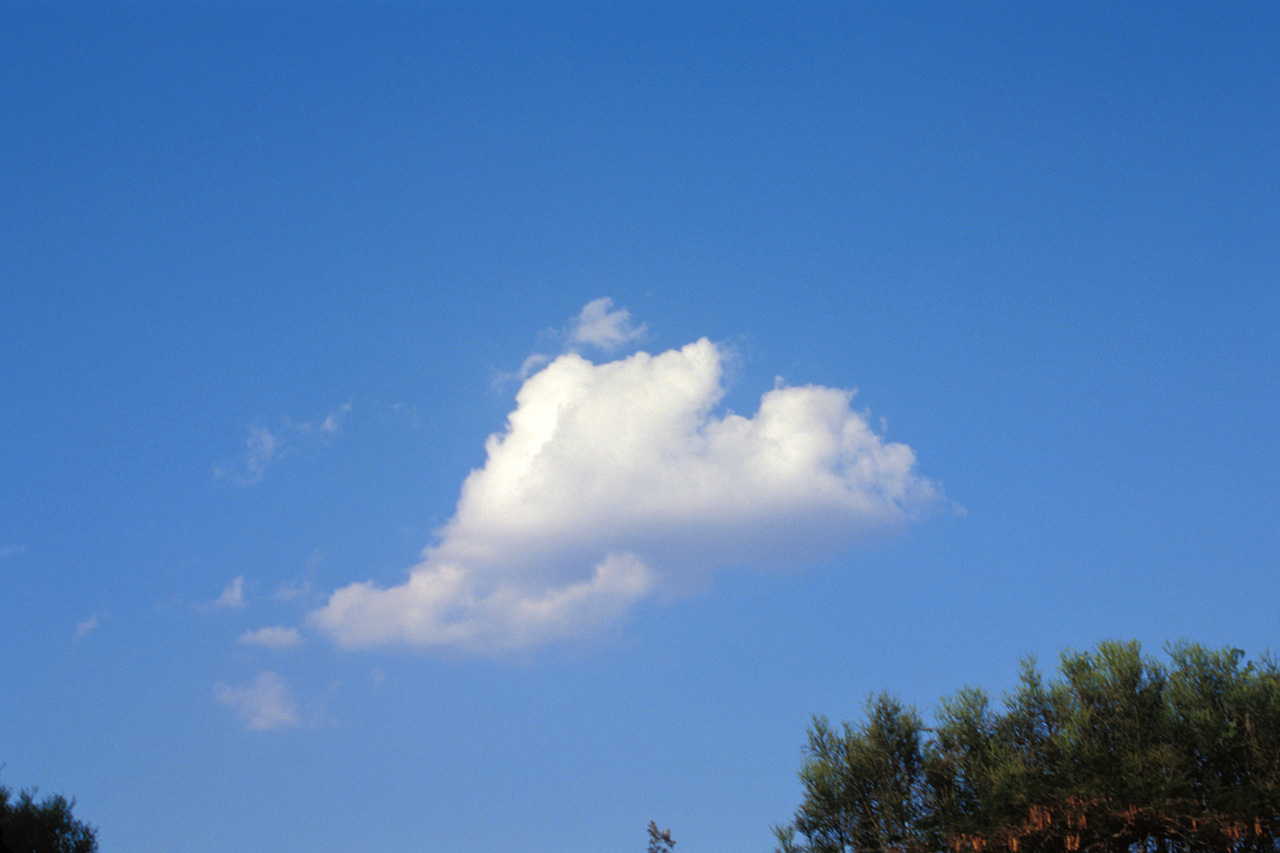
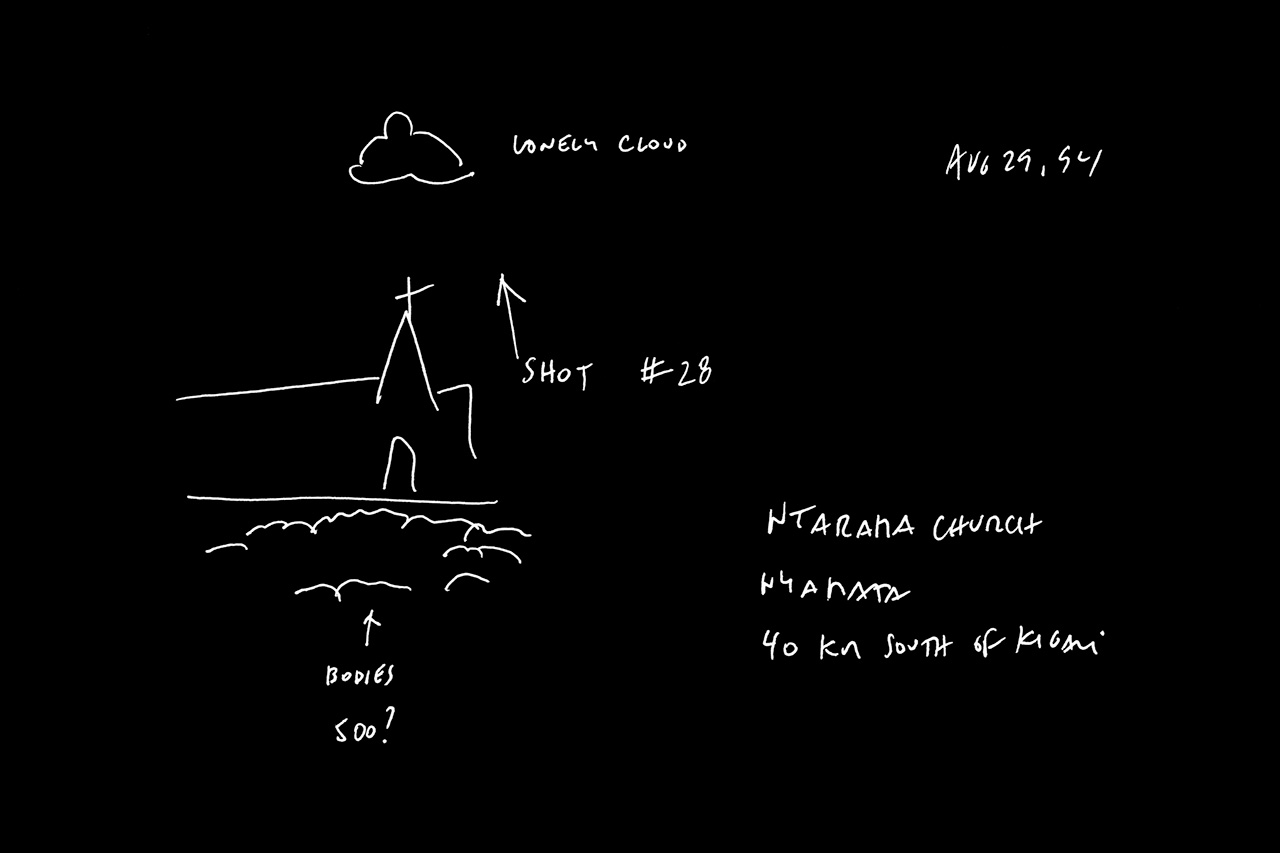
Fig.8. Field, Road, Cloud (Detail) (1997)
In Field, Road, Cloud 1997, three photographs can be viewed which, as the title suggests, are pictures of a field, road and cloud in Rwanda. The poetic nature of the images is challenged when the image is translated into a ‘document’ and the translation is juxtaposed with its photograph. We then learn that the three images are sites related to atrocities where people were brutally murdered. Jaar also uses documentary photographs to undermine certain unchallenged data. (Chow, 2008)
List of Illustrations
Fig.1. Jaar, A (2022) Mea Culpa [Doctored Economist Covers] At: https://www.timesensitive.fm/episode/alfredo-jaar-on-bringing-reality-into-focus (Accessed 18/05/26)
Fig.2. Jaar, A (2017) The Garden of Good and Evil [Steel] At: https://ysp.org.uk/art-outdoors/the-garden-of-good-and-evil (accessed 24/05/26)
Fig.3. Jaar, A (1989) The Fire Next Time [Twenty-two metal light boxes with black-and-white transparencies] At https://high.org/collection/the-fire-next-time/ (Accessed 24/05/26)
Fig.4. Jaar, A (1996) The Eyes of Gutete Emerita [Single-channel digital video, transferred from black-and-white text transparencies and color photograph transparencies, black-and-white and color, silent] At: https://museemagazine.com/features/2020/12/7/from-our-archives-alfredo-jaar (Accessed 24/05/26)
Fig.5. Jaar, A (2006) From Time to Time [C-print mounted on plexiglass] At: https://artuk.org/discover/stories/alfredo-jaar-poetic-visual-interventions (Accessed 24/05/26)
Fig.6. Jaar, A (1997) Field, Road, Cloud [C-Print and Drawings] At: https://alfredojaar.net/projects/1997/the-rwanda-project/field-road-cloud/ (Accessed 24/05/26)
Fig.7. Jaar, A (1997) Field, Road, Cloud [C-Print and Drawings] At: https://alfredojaar.net/projects/1997/the-rwanda-project/field-road-cloud/ (Accessed 24/05/26)
Fig.8. Jaar, A (1997) Field, Road, Cloud [C-Print and Drawings] At: https://alfredojaar.net/projects/1997/the-rwanda-project/field-road-cloud/ (Accessed 24/05/26)
List of References
Zuckerman, A (2022) ‘Alfredo Jaar on Bringing Reality Into Focus‘ At: https://www.timesensitive.fm/episode/alfredo-jaar-on-bringing-reality-into-focus (Accessed 18/05/26)
Yorkshire Sculpture Park (s.d.) Alfredo Jaar: The Garden of Good and Evil At: https://ysp.org.uk/art-outdoors/the-garden-of-good-and-evil (Accessed 18/05/26)
High Museum (s.d.) The Fire Next Time At: https://high.org/collection/the-fire-next-time/ (Accessed 24/05/26)
Jaar, A (2014) Dec 10 From Our Archives: Alfredo Jaar At: https://museemagazine.com/features/2020/12/7/from-our-archives-alfredo-jaar (Accessed 24/05/26)
Museum of Fine Arts Houston (s.d.) The Eyes of Gutete Emerita At: https://emuseum.mfah.org/objects/66608/the-eyes-of-gutete-emerita (Accessed 24/05/26)
Chow, O (2008) Alfredo Jaar and the Post-Traumatic Gaze At: https://www.tate.org.uk/research/tate-papers/09/alfredo-jaar-and-the-post-traumatic-gaze (Accessed 24/05/26)