
Powered by Collaboration: The Breath Control Project

Fig.1. Breath Control: Hyperventilation (2017)
This reflective essay will explore how Caroline Wright’s Breath Control Project makes manifest Vera John-Steiner’s theoretical framework of collaboration in a socially engaged, site-specific fine art practice. Over the course of ten years, encompassing performance, installation and public engagement, Wright’s project has brought together the expertise and experience of other professional creatives, scientific and philosophical advisors, and members of the public, in ways that oppose a singular definition for “collaboration”. Using John-Steiner’s framework of distributed, complementary, family and integrative modes of collaboration, I will explore the varied modes of collaboration present in the project, consider the challenges and successes that emerged, and reflect on suggestions for my own practice, which is founded in a more solitary, phenomenological, place-based approach.
Context
The Breath Control Project is a useful reference for how collaborative working should be seen as a spectrum of interactions, rather than a singular, fixed activity. Exploring the “inhalations and exhalations that form the melody, rhythm, and punctuation of our everyday existence” (Wright, 2026), each of the discrete but related pieces – Hyperventilation, Notes, Fragility, Osmosis, Breathing Hut and At the Point of Perforation – that constituted the project, drew on a wide range of experts – choreographers, scientists, philosophers, glassmakers, hospital patients and members of the public, to produce a suite of multi-disciplinary and multiformat works.
Collaboration Types Inherent Across the Project
The most visible mode of collaboration across the constituent projects is Complementary. Lighting (Trui Malten on Hyperventilation), choreography (Stephanie Schober on Hyperventilation), musical direction (Laura Wright on Hyperventilation) and costume (Tim Spooner for Osmosis) all evidence the coalescing of distinct expertise towards a coordinated whole typical of the Complementary mode. This is collaboration by division of labour – efficient, well-suited Wright’s technically layered, multisensory performances, but reliant on the presence of robust integrating structures to avoid the occurrence of fragmentation.
Complementary Collaboration also operated at a different register – in the cross-disciplinary work Wright conducted with academic and engineer David Howard, philosopher Dr Havi Carel and King’s College London’s Environmental Research Group. These collaborations required the bridging of different expert communities – medicine, phenomenology of illness, environmental science – each having its own language and evidentiary standards. This is arguably a demanding presentation of the Complementary mode as it requires building shared conceptual ground before creative synthesis can occur. As an extract of Carel’s book Illness: The Cry of the Flesh was successfully woven into the performance indicates that conceptual synthesis (at some level) was achieved.
There is the suggestion of both John-Steiner’s Distributed and Complementary modes of collaboration in Wright’s use of non-professional collaborators – the participants of the Breath Choir in Hyperventilation, the contributors to Notes, the passers-by on Felixstowe beach in Breathing Hut. Complementary in the differences of skill, training and temperament the participants brought. Distributed in the diffuseness, looseness and informality of how participants were inducted into the project. Regardless of mode, lived experience, not professional experience, was the material being collaborated with, and, as the case study notes, a scaffolding was required to shape the workshops that evolved the participants contribution. This evidences John-Steiner’s assertion that collaboration across expertise gaps often has an apprenticeship dimension, where genuine co-authorship is dependent on an initial structure being built.
The clearest instance of John-Steiner’s Integrative mode (in its fullest sense) is Tim Spooner’s process for costume design; he read the script, observed rehearsals, and resolved creative decisions – such as the final colour palette for the glass props – with the team through the sketches he presented them. Similarly, Wright’s dialogue with the glass specialist Michael Baumbach, where…
“a discussion about the creative intentions for the piece – to represent the populations with all its differences and variations of the human for, offered a sound context for the variable nature of each larynx” (Wright, 2026)

Fig.2. Breath Control: Fragility (Detail) (2016)
…shows the co-creation interaction between material process and conceptual framing. Idea and material co-produce the finished form. The glass doesn’t simply receive Wright’s intention, nor does the glass-makers process solely dictate the outcome, each becomes legible through the other.
The recurrence of certain names across the decade timespan of the project – Laura Wright, Cat Harrison, John Hayward, Michael Baumbach – suggests the presence of the Family mode of collaboration. This continuity suggests that trust established in earlier iterations enabled greater creative risk in later versions, from the “work in development” in 2017, to the Venice Biennale Fringe commission in 2019.
Addressing Challenges
Certain difficulties are explicitly confronted in the case study. As Wright herself notes about the problem of coherence between the parallel working of many complementary contributors:
“The balance between the various parts of the work, the performers and their prominence and positions, and segues between each of the seven sections was of concern throughout” (Wright, 2026)
The project’s responded structurally by adopting a shared scaffold, the medically derived “Seven Steps for Health Breathing”, which gave every collaborator a common reference: this external framework an effective substitute for constant top-down coordination.
Hyperventilation presented a further challenge in the translation of lay, emotional material – participants’ personal experiences of breathing difficulties – into creative content: simple extraction of testimony wasn’t enough, rather, time-intensive workshops were required. Further challenges existed in Breathing Hut a theatrical piece had to be reimagined for an open beach, where ambient noise, public intervention and the need to build trust with strangers in intimate, unscripted encounters had to be contended with.
Successes and Their Implications
Where the project succeeds, it’s because integrative dialogue is built into inherently complementary or distributed processes. For Hyperventilation the adoption of the choir participants’ suggestion of position in relation to the audience indicates genuine collaborative authorship and not tokenistic participation. Framed through John-Steiner, this shows that successful large-scale collaboration is not simply the sum of well-managed complementary roles, but a result of deliberately created moments where ostensibly complementary or distributed collaborators are allowed to move into integrative dialogue. The sustained continuity of the ley collaborators over the decade timeline also suggests, as John-Steiner would call it, a thought-community – participants engaged in an evolving, shared inquiry into breath, health and the body.
Implications for My Own Practice
The current manifestation of my own practice – a phenomenological, walking based archive project centred on Hastings – sits in productive tension with what Wright’s project demonstrates. Where Breathe Control is founded on leveraging both professional and lay voices, my approach, with nods to Merleau-Ponty, Heidegger and Barad, tends towards prioritising embodied encounters between artist and place. However, Wright’s project prompts me to reconsider where genuine collaboration might be present in my work, even where it isn’t conventionally recognised as such.
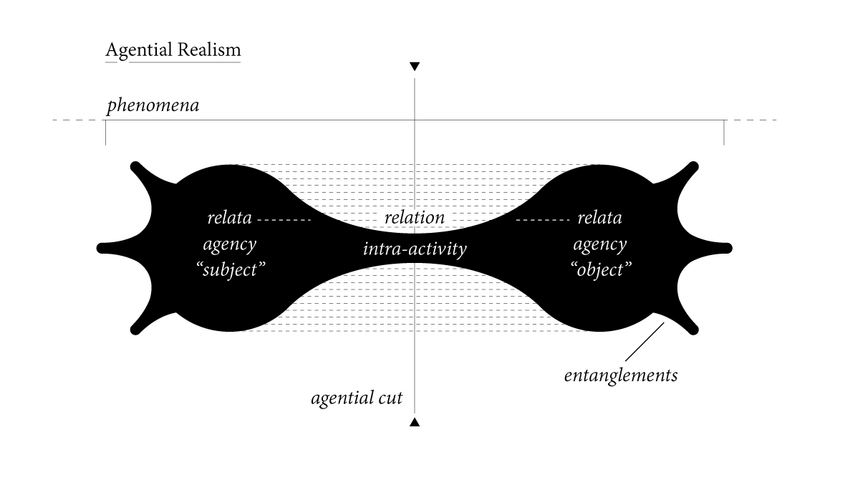
Fig. 3. Representation of Barad’s Agential Realism (2016)
Following Karen Barad’s account of agency as something that emerges through relation, rather than being possessed by siloed parties, I have begun to treat the layers of Hastings (ancestral, historical, economic etc) as a collaborator rather than a passive subject. Pausing here on Barad’s definition, her notion of intra-action proposes that two entities do not exist in a determinate way prior to their entanglement; each is constituted in and through the encounter. Framed this way, the anomalies and bubbles captured in Baumbach’s glass larynxes are not incidental by-products of Wright’s intention meeting an inert material, but evidence of maker and material becoming mutually determinate through the act of making – collaboration, not as an exchange between fixed positions, but as a boundary-drawing practice, from which both parties emerge as it proceeds. Framing my own walking practice in a new-materialist reading, the walking body and the journeys walked are not two separate things that come into contact but come to be what they are through the act of walking itself.
At the same time, the participatory elements of Wright’s project – non-specialists contributing their lived experience through structured workshops – suggests a direction I have been considering but have not yet tested: inviting other Hastings’ residents, particularly those with long standing or ancestral ties, into a more explicit collaborative role, as opposed to solely treating my own phenomenological encounters as the sole creative act. This would require a project scaffolding that Wright’s project demonstrates: not simply extracting testimony but building structures that allow genuine co-authorship to emerge.
Conclusion
Wright’s Breath Control Project clearly demonstrates that collaboration is not a single nor a set of siloed practices. Collaboration is a spectrum, moving between complementary role-division, cross-disciplinary transcreation, participatory scaffolding and integrative co-construction. What sustains Wright’s project over its decade timeline is the recurring willingness to let distributed and complementary work open into a genuinely integrative dialogue. For my own practice, this indicates that collaboration need not abandon a solitary, embodied methodology, but might instead mean recognising and structuring the relationships, both human and non-human, through which both artist and place are already constituted rather than merely met.
(1442)
Bibliography
Barad, K (2007) Meeting the Universe Halfway: Quantum Physics and the Entanglement of Matter and Meaning. Durham, NC: Duke University Press Books
Carel, H (2018) Illness: The Cry of the Flesh (3rd ed.) London: Routledge
Critchley, S. (2009) ‘Being and Time, part 1: Why Heidegger matters’ In: The Guardian 08/06/2009 At: https://www.theguardian.com/commentisfree/belief/2009/jun/05/heidegger-philosophy (Accessed 03/05/26)
Critchley, S. (2009) ‘Being and Time, part 2: On ‘mineness” In: The Guardian 15/06/2009 At: https://www.theguardian.com/commentisfree/belief/2009/jun/15/heidegger-being-time-philosophy (Accessed 03/05/26)
Critchley, S (2009) ‘Being and Time, part 3: Being-in-the-world’ In: The Guardian 22/06/2009 At: https://www.theguardian.com/commentisfree/belief/2009/jun/22/heidegger-religion-philosophy (Accessed 03/05/26)
Critchley, S (2009) ‘Being and Time, part 4: Thrown into this world’ In: The Guardian 29/06/2009 At: https://www.theguardian.com/commentisfree/belief/2009/jun/29/religion-philosophy (Accessed 03/05/26)
Critchley, S (2009) ‘Being and Time, part 5: Anxiety’ In: The Guardian 06/07/2009 At: https://www.theguardian.com/commentisfree/belief/2009/jul/06/heidegger-philosophy-being (Accessed 03/05/26)
Critchley, S (2009) ‘Being and Time, part 6: Death’ In: The Guardian 13/07/2009 At: https://www.theguardian.com/commentisfree/belief/2009/jul/13/heidegger-being-time (Accessed 03/05/26)
Critchley, S (2009) ‘Being and Time, part 7: Conscience’ In: The Guardian 20/07/2009 At: https://www.theguardian.com/commentisfree/belief/2009/jul/20/heidegger-being-time-critchley (Accessed 03/05/26)
Critchley, S (2009) ‘Being and Time, part 8: Temporality’ In: The Guardian 27/07/2009 At: https://www.theguardian.com/commentisfree/belief/2009/jul/27/heidegger-being-time-philosophy (Accessed 03/05/26)
John-Steiner, V (2000) Creative Collaboration Oxford: Oxford University Press
Merleau-Ponty, The Phenomenology of Perception (2022) [YouTube Video] At: https://youtu.be/JFj8kWm_N-Y?si=z20-1y2pLqKmEhm2 (Accessed 14/06/26)
Wright, C. (2026) Case Study 1: The Breath Control Project. OCA Learn. Available at: https://learn.oca.ac.uk/mod/book/tool/print/index.php?id=28333 (Accessed: 18 July 2026)
List of Illustrations
Fig.1. Millings, T (2017) Breath Control: Hyperventilation [performance] At: https://learn.oca.ac.uk/mod/book/tool/print/index.php?id=28333 (Accessed: 18 July 2026).
Fig.2. Millings, T (2016) Breath Control: Fragility (detail) [glass larynx] At: https://learn.oca.ac.uk/mod/book/tool/print/index.php?id=28333#ch9194 (Accessed: 18 July 2026).
Fig.3. Lewis, J (2016) Representation of Barad’s Agential Realism [infographic] At: https://www.researchgate.net/figure/Lewis-J-2016-Representation-of-Barads-Agential-Realism-Permission-to-reproduce-has_fig1_354788499 (Accessed: 18 July 2026)